When to replace it: Rear Derailleur Pulleys
A functioning rear mech is essential for crisp shifting but how often do you check the wear on its component parts?
When To Replace It is a new feature series in which we explore when one should replace common cycling products like helmets, apparel and various moving parts on your bike. Curious about a particular product? Shoot us an email at [email protected]
How do you know when to replace stuff you wear when riding, or on your bike? Tyres have wear indicators, and disc brake pads can be measured with a calliper.
It’s never a bad idea to measure your chain from time to time, especially when you think it might be time to replace it based on distance ridden, rider size and other factors.
But what about servicing your rear derailleur? Do you wait until you’re missing shifts and incorrectly diagnose the problem?
The short and simple answer is: It depends.
Just like some cyclists will get just 3,000km before replacing a chain and cassette, while others may get more than 6,000km, replacing rear derailleur pulley wheels—sometimes called jockey wheels—also depends on wear, not a set interval.
Larger riders who put out more watts and create more mechanical stress on their drivetrains may need to service and replace pulley wheels more frequently than smaller riders. Riding in wet conditions, which introduces grit into drivetrains, will also shorten the life of pulley wheels even if cleaned between rides.
Worn chains that do not sit on pulley teeth properly will wear them. Likewise, worn guide pulley teeth won’t offer precise shifting, which in turn wears cassette teeth and chain parts. Of course, you can reduce drivetrain wear through thorough and frequent cleaning. Cleaning also affords the opportunity to examine components for wear.
We asked Shimano about causes of pulley wear and were told the most common causes are mud and dirt, high mileage and heavy load riding, infrequent maintenance and chain wear. Shimano told us tracking pulley wheel wear signs can be pretty straightforward, but requires some subjective judgement.
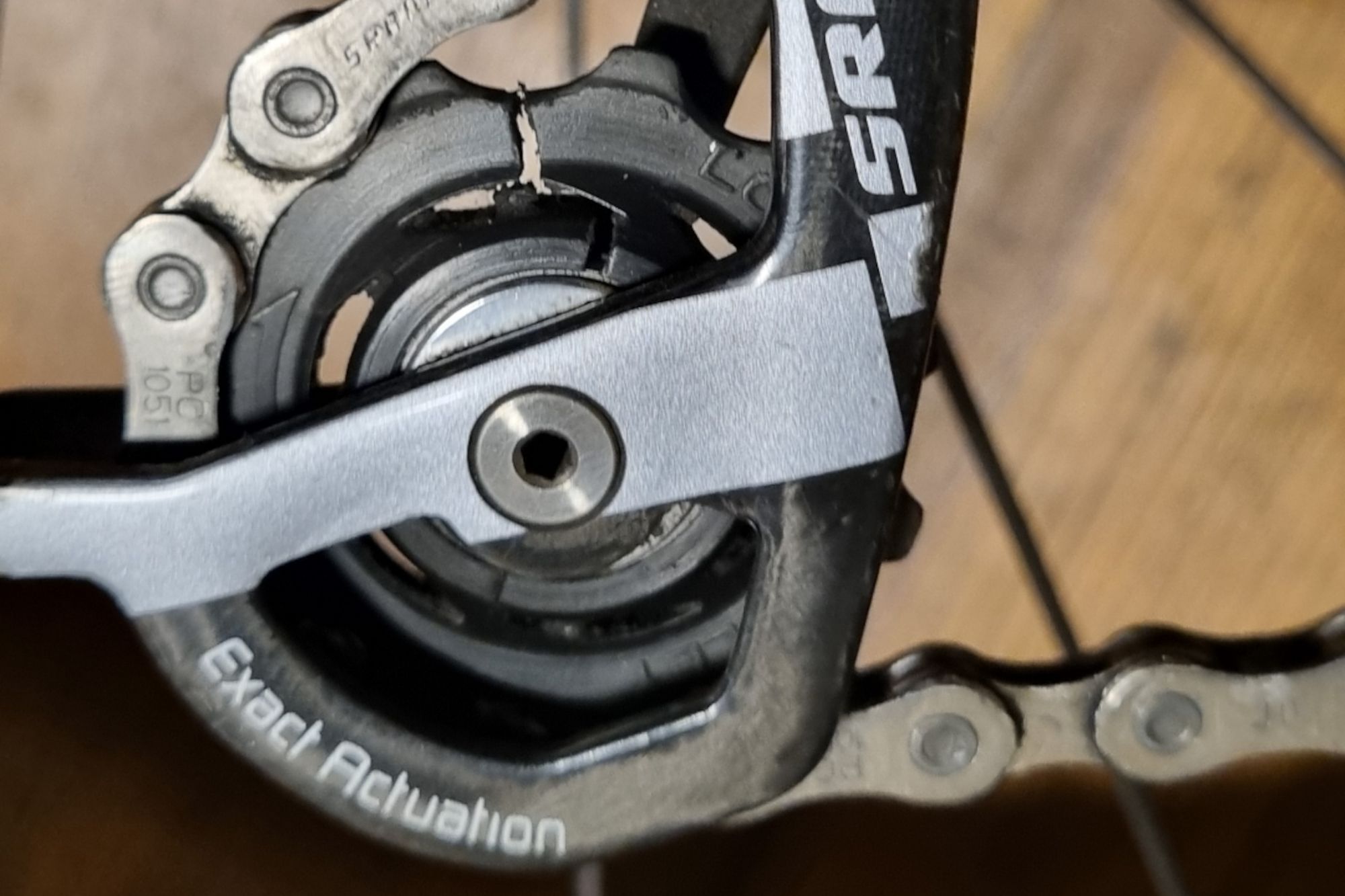
"If the pulleys are no longer spinning smoothly, are showing visible wear, or are contributing to poor shifting, it’s time to replace them – regardless of mileage," a Shimano representative told Cycling Weekly.
"Shimano does not set specific mileage or time intervals for replacing derailleur pulleys, as wear varies widely based on riding conditions, terrain, and maintenance habits. Instead, riders should regularly inspect their pulleys and replace them when clear signs of wear or performance issues appear."
Some indicators may be:
We like proactive maintenance before many of these signs are evident. After 10 years of use and regular maintenance, I replaced the pulley wheels on a dedicated indoor bike—which previously spent five years' duty as my primary outdoor road bike—to ensure shifting remained crisp and precise. Your replacement schedule may vary.

Replacing pulley wheels is one of the easiest maintenance tasks you can perform. When swapping new pulleys for old, the process is easier with the rear wheel removed. You’ll need a 3mm hex wrench. For the detail-oriented, a torque wrench can be used when reinstalling fasteners.
The lower pulley is the tension pulley, which aids in keeping slack from the chain. The upper wheel is the guide pulley and aids in moving the chain from cog to cog. Shimano upper guide pulleys have longer teeth designed to maintain chain control during shifts, while lower tension pulleys have shorter, wider teeth that may offer greater durability under dynamic chain tension.
Shimano replacement pulley wheels are directional. Look for the arrows indicating direction for the tension pulley inboard of the teeth; the guide pulley rotates in the opposite direction. Shimano indicates using a sufficient amount of grease on the inside of the pulley cap. After servicing, tighten the pulley bolt with a 3mm hex wrench up to a torque of 5nm.
When replacing pulley wheels on SRAM road rear derailleurs, the lower pulley L indicator should face inward (towards the bike). The U indicator for the upper pulley should also be facing outwards.
Campagnolo Record 12-speed guide- and tension pulley wheels are specific, too. The upper guide pulley has longer tooth profiles, which may be ideal for wide-range cassettes. The Campy 13-speed lower tension pulley has shorter profile teeth, with less taper. Campy indicates this may offer greater durability and chain stability as it winds onto the cassette. Standard Campy pulleys have OEM steel bearings, unless ceramic is indicated.
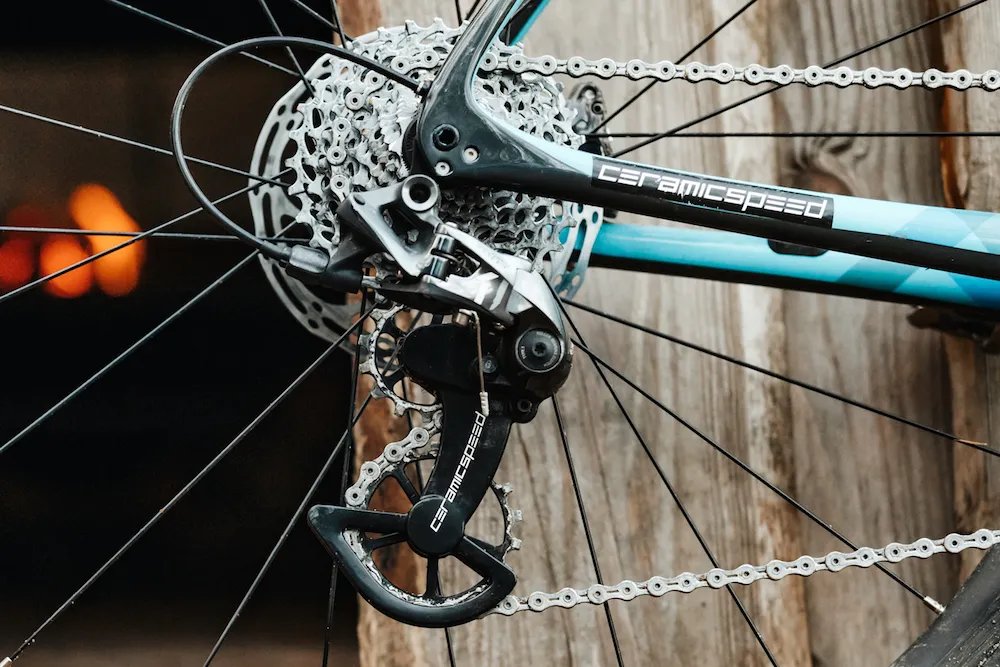
When replacing pulley wheels, they can be replaced in kind or with ceramic bearing upgrades, which may offer single-digit watt savings. Be aware that most manufacturers indicate that replacing OEM pulley wheels with third-party components may void your warranty.