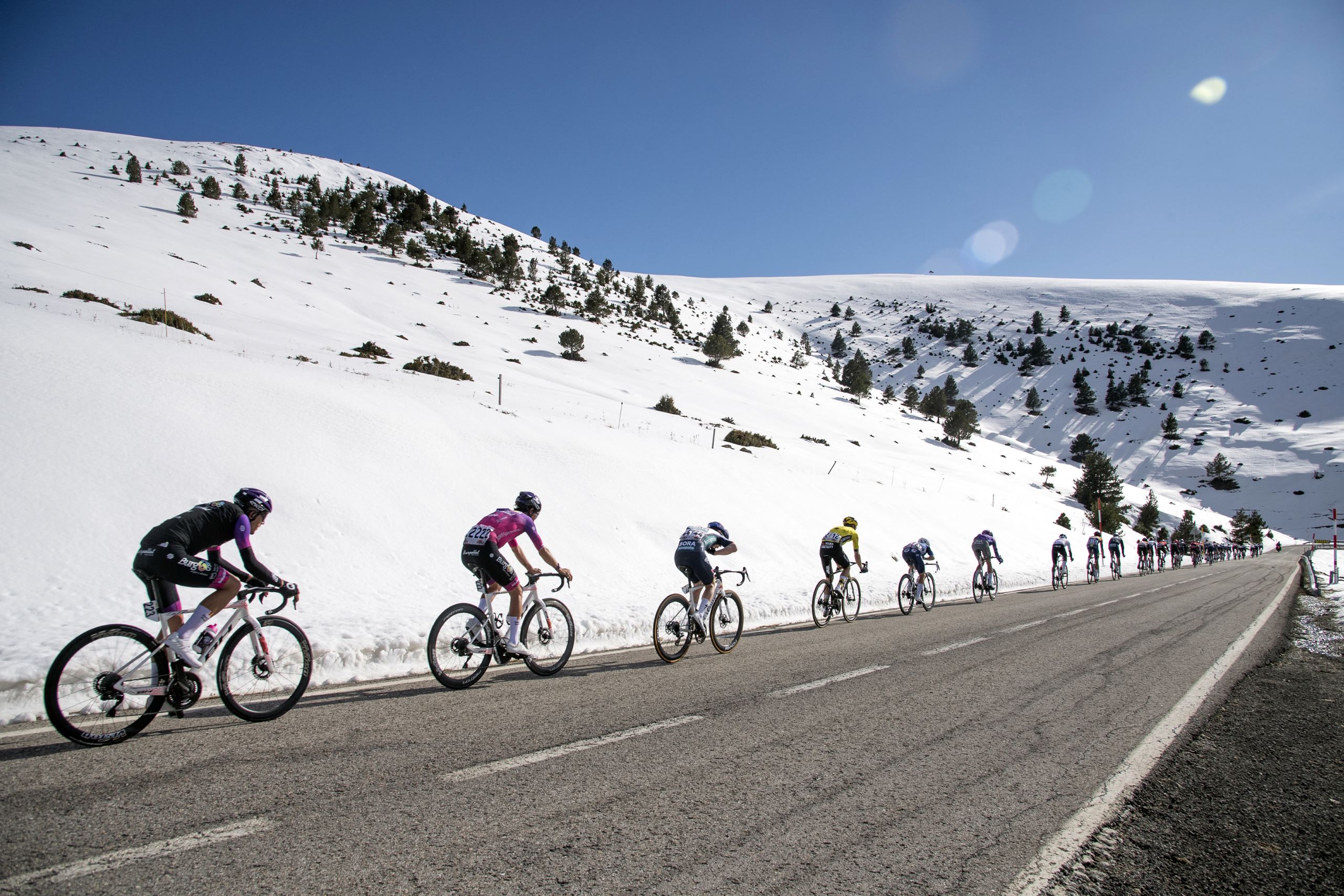
What is the UCI's Extreme Weather Protocol?
We take a look at what it is, when it's needed, and the extra High Temperature Protocol
The latest race content, interviews, features, reviews and expert buying guides, direct to your inbox!
You are now subscribed
Your newsletter sign-up was successful
The Extreme Weather Protocol was introduced by the Union Cycliste Internationale in 2015 as a way of tackling – you guessed it – harsh weather conditions.
It came on the back of a number of weather-related incidents that demanded a series of ground rules that meant riders, teams and organisers could all start on the same page when it came to resolving such problems.
Incidents such as the shortening of the 2013 Milan-San Remo in freezing conditions, riders broiling in 37°C heat at the Tour of California and heavy snow at the Giro d'Italia – both the following season – convinced the UCI that it needed to tackle the issue.
The protocol was conceived by the UCI in conjunction with the Cyclistes Professionels Associés (CPA) riders' association, the AIGCP pro cycling teams' association and the AIOCC race organisers' association, and allows them all to come together even on the strength of a poor forecast and decide what path to take.

The protocol also covers the eventuality of any of these conditions developing during the race, as well as other non-weather-related ones:
- a major crash that blocks the road and limits emergency access, or
- warnings from local authorities or emergency services indicating imminent danger to the riders.
The protocol also provides for other safety issues such as cars on the course and dangers from spectators.
Once the protocol is triggered, representatives from each of the stakeholder associations come together to discuss an action plan. This meeting can be requested by any of the individual stakeholders.
The rules emphasise each participant taking part with a fair and open mind, saying: "Participants shall take part in a constructive spirit and shall listen to the views of others while employing common sense, taking into account the interests of all stakeholders and preserving the good image of the sport of cycling."
Decisions on the way forward must be reached by consensus, with the organiser and commissaire taking the final decision if no agreement can otherwise be reached.
The High Temperature Protocol was added in 2024 to take account of especially high-heat days and put safety measures in place for team staff and race officials as well as the riders.
The protocol uses something called the Wet Bulb Globe Temperature (WBGT) index to measure the heat stress experienced by the riders that takes into account wind speed, humidity and UV factor as well as air temperature.
The protocol divides risk into five bands: white – below 15deg C on the WBGT index (very low risk); green – 15-17.9deg C (low risk); yellow 18-22.9deg C (moderate low risk); orange – 23-27.9deg C (moderate high risk); red 28deg C and above (high risk). Each band comes with its own recommendations, as follows:
White: no specific countermeasures
Green: warm-up in the shade with fans, skin protection with non-greasy sun creams, choice of light-coloured clothing, normal hydration plan
Yellow: warm-up with ice vests, use of fresh towels, application of strict, individualised hydration plans, distribution of "ice-socks", supply of ice to the teams during the race
Orange: adaptation of the start area to keep riders in the shade before the start, protect officials, organising staff and volunteers from the sun, increase the number of neutral motorbikes providing riders with drinks and ice packs, adapt the rules limiting hydration and cooling in competition
Red: modification of start and finish times, possible neutralisation of a section of the race or stage, cancellation of the stage/race
The protocol also takes into account the terrain featured in the race, with the slow speed of climbing working against the benefit of wind cooling.
As with the extreme weather protocol, the high temperature protocol calls for a mandatory meeting when "high ambient temperatures" are forecast, or can be called by any one stakeholder. As well as the rider, team and organiser representative, the high temperature protocol also requires a doctor and head of safety to be present.