Best winter cycling shoes 2026: footwear for cold weather riding reviewed and rated
Investing in the best winter cycling shoes will keep your feet warm every winter for years to come
For dedicated cyclists, keeping the extremities warm in cold conditions is a perennial problem; that's where the best winter cycling shoes come in. Keeping feet comfortable can be particularly difficult, as they sit far from the warm core and are right in the firing line for freezing road spray, even with mudguards. Furthermore, cycling shoes are heavily performance-oriented, which makes them largely immobile, save for the occasional toe wiggle.
One solution is normal cycling shoes, warm socks, and overshoes, but this isn't always ideal; your summer shoes will get damp and dirty, overshoes are rarely fully waterproof, and cramming thick socks into close-fitting shoes further reduces blood flow and, therefore, warmth.
Winter-specific cycling shoes are the best solution to warm feet in cold weather. They include insulation, a waterproof membrane, and a more forgiving fit to accommodate thicker socks, plus a high cuff to protect the ankle. Using winter shoes in grotty weather also helps keep your summer shoes in good condition.

The Lake CX146 is our pick of the best overall winter cycling shoe
Our expert review:
Made from leather-look water-resistant microfibre, the Lake CX146 shoes have a real old-school boot vibe. The cuff is taller than many of the other winter footwear that we've tested and this helped in the overall weatherproofing of these comfortable winter cycling shoes.
Ideally, we would have preferred a couple of BOA closures rather than just one, but reducing the number of openings on a shoe does assist in keeping water out, and it didn't seem to impact fit or comfort unduly. If anything, it probably helps keep the overall price down, making these one of the most reasonably priced pairs of winter boots on the market right now.
The sole does have slightly more flex than a performance road cycling shoe, but we noted that it wasn't over-flexible, and there was no noticeable lack of power.
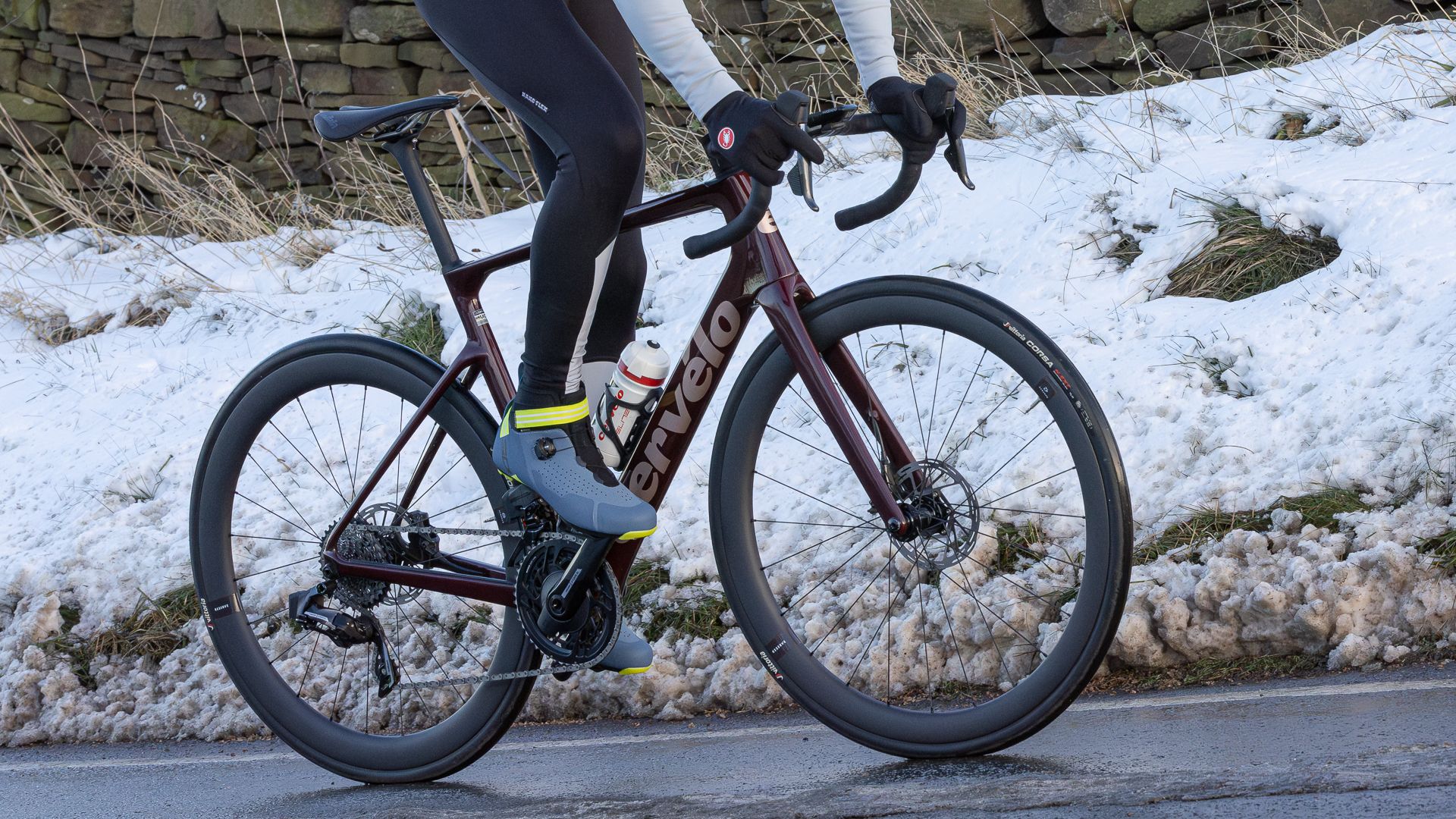
Overall, on a snowy bike ride our tester's feet were kept warm and cosy and didn't feel any negative impact from the added bulk of the boot instead of a shoe.
An excellent weatherproof winter cycling boot for a reasonable price.
More information in the full review.

Sidi Nix shoe
Our expert review:
As you might expect from Sidi, the Nix sits at the more performance-orientated end of the winter shoe spectrum, with a 9 out of 12 stiffness sole unit and a relatively slim fit. However, their new ‘Millennium’ last is more in line with that of other brands in terms of sizing and our tester wore his normal cycling shoe size.
The boot is lined with Primaloft fleece which provides good levels of warmth and has the added advantage of providing a secure, non-slip grip on the foot. The single BOA-style dial doesn’t go all the way to the top of the boot, but rather the final level of adjustment is provided by a Velcro strap. This runs all the way around the ankle and further improves heel security. A new PFC Gore-Tex membrane protects from rain, snow and road spray.
The Nix felt very neat on the bike, a result of their close fit. Stiffness was simply never an issue and neither were cold feet - the combination of insulation and waterproof membrane did its job very well in chilly conditions. However, the cuff is pretty low and sometimes left a draughty gap between bib tights and shoes which wasn’t ideal when there was spray coming off the front wheel.
Get all the details in the full review.

Fizik Tempo Artica winter cycling boots
Our expert review:
Fizik's Artica winter shoes were the first pair of winter shoes that convinced me to never go back to overshoes. After 12 winters in the very wet and cold Pacific Northwest of Americaq, I finally became a winter boot convert. Warm, convenient and with a fit not too unlike a regular road shoe, Fizik’s Artica boots are a performance-oriented offering that will make the dreaded winter base miles a lot more comfortable.
The Tempo is the road version and features a traditional reinforced carbon sole with a three-bolt attachment for road cleats. I found it to be stiff enough.
Considering the protection it offers, it’s a reasonably light shoe, and the L6 BOA closure allowed me to dial in the fit so it was nice and snug. The ankle cuff helps here too although I did find it a little roomy, which meant it let in the rain.
Still, the inner fleece material did a great job of keeping my feet warm - in fact, you’ll need to consider whether you need such warmth depending on where you live. However, if you ride often in temperatures that dip below freezing then they’re likely a good match.

Sidi Algor off-road cycling shoes
Our expert review:
Even after four hours of riding the Sidi Algor winter cycling shoes in sub-zero, snowy conditions, my feet were still warm and dry which was very impressive.
This can be attributed to the Primaloft synthetic insulation layer on the inside and the fully wrapped TPU waterproof outer layer.
Despite their stiff-looking appearance, the Algors were pretty easy to put on, thanks to the nearly full-length zip and quick-lace closure system. That said, they are on the slim side once on, so they are not the best choice for wide-footed riders.
Ideally, the lacing could have gone a little further up the foot to provide a more secure fit, especially on the heel. However, this is only noticeable when off the bike and walking.
I would also have liked to have seen a closer fit between the front of the shoe and my ankle. The gap was prone to having cold chunks of snow and ice flicked into it and couldn't be reduced using the zip or the Velcro ankle tab.
There is also a non-Primaloft version available called the Nubes MTB which is identical except for the added insulation.
Overall, these were warm, comfortable shoes that worked well in challenging conditions, but check heel retention and fit around the ankle before buying.
Cycling Weekly's North American Editor, Anne-Marije Rook, started out as a newspaper reporter, working in a print newsroom where the coffee was always burnt and clocks running out of time. Originally from The Netherlands, she grew up as a bike commuter but didn't find bike racing until her early twenties. Strengthened by the many miles spent darting around the hilly city of Seattle on a steel single speed, Rook's progression in the sport was a quick one. As she competed at the elite level, her journalism career followed, and soon she became a full-time cycling journalist. She's now been a cycling journalist for 12 years.
These days she's less about competition and more about adventuring, yet there's hardly a day that goes by when she's not found pedaling. For Rook, a good week is when all the bikes in her stable get ridden, from her full-suspension trail bike down to her Brompton and some speedy road miles in between.
Tim Russon is a writer and photographer who has worked in the outdoor and cycling industry for over 20 years. He can’t remember a time when he didn’t own a bike and has road, gravel, mountain and retro bikes in the shed. His favourite place to ride is the Dolomites, a simply stunning area which has breathtaking views and incredible roads combined with lovely food and great wine.
He prefers long, hot climbs in the big mountains, but as he lives on the edge of the Peak District, he has to make do with short, cold climbs most of the time instead.
For summer cycling shoes, manufacturers will go all out in the pursuit of breathability; this becomes less of a concern in colder weather but it is still important that your feet don't get damp and chilled from sweat.
Ventilation is the first feature to be addressed – you won’t find large vent holes in winter cycling shoes as you do in summer versions as this would let cold air and water in, but some breathability is still important to mover water vapour away from the skin.
Often, the top of the shoe will feature a neoprene cuff or cover. This will keep the rain out and act as an extra layer of defence against the chill.
The ankle cuff will be high, too – this is to prevent puddle water from seeping into the shoe. If you can try on the shoes, check that the cuff is not overly tight for you and allows full range of motion – ideally you’re looking for an adjustable fit.
Fastenings, as per summer cycling shoes, can be BOA dials, ratchets, Velcro, or even laces. BOA dials and ratchets are the most effective when it comes to holding your foot in place and surviving the conditions.

The same rules applied to summer shoes come into play when it comes to the sole, too. Nylon soles are the cheapest, they’ll do the job but will provide a little more flex — they also insulate a bit better than carbon.
Carbon soles are the most expensive, they’ll be mega stiff and will offer plenty of power transfer. It’s worth bearing in mind that in winter you may be completing long base miles, where you might not want the ultimate stiffness, and a nylon/carbon mix may be more comfortable, but this is down to personal preference.
Since you might be walking on slippery surfaces (dismounting to get to that long-awaited hot chocolate stop, for example), a sole with some grip is desirable. Replaceable heel treads are a ‘nice to have’ as you’ll expect that these shoes will last for more than one season.
For the added traction, it may even be worth considering a set of two-bolt MTB winter kicks; the rubber lugs provide lots of additional purchase as you're trudging through the snow or across a wet tile floor at the coffee shop — but you'll then need to invest in a set of two-bolt pedals too if you don't already have them.
Finally - obviously if you're cycling clipped in then your shoes need to be compatible with the pedal system - all road-specific winter cycling shoes should come ready to fit three-bolt pedals and cleats.
Making sure the shoe allows enough room without letting the foot float around has been a big issue for us - in previous tests, we've found both BOA versions and Velcro versions that haven't really done the job. The shoe needs adequate fastenings to stop your heel from slipping during the pedal stroke.
Shoe brand sizing differs tremendously. Where a rider might wear a Euro 38 in one brand, they could be pulling on a 42 in another – sounds ridiculous, but it’s true. Where possible, try shoes on; where it’s not, look to buy shoes from a brand you’re already familiar with.
One of the biggest mistakes riders make over winter is wearing thick socks which reduce the amount of space in the shoe and cut off blood supply – worsening the numbness or even causing it. With good winter boots, you shouldn’t need to go overboard, and a thin merino sock should be enough. But if you think you’ll need more sock, make sure you leave a little extra breathing room.