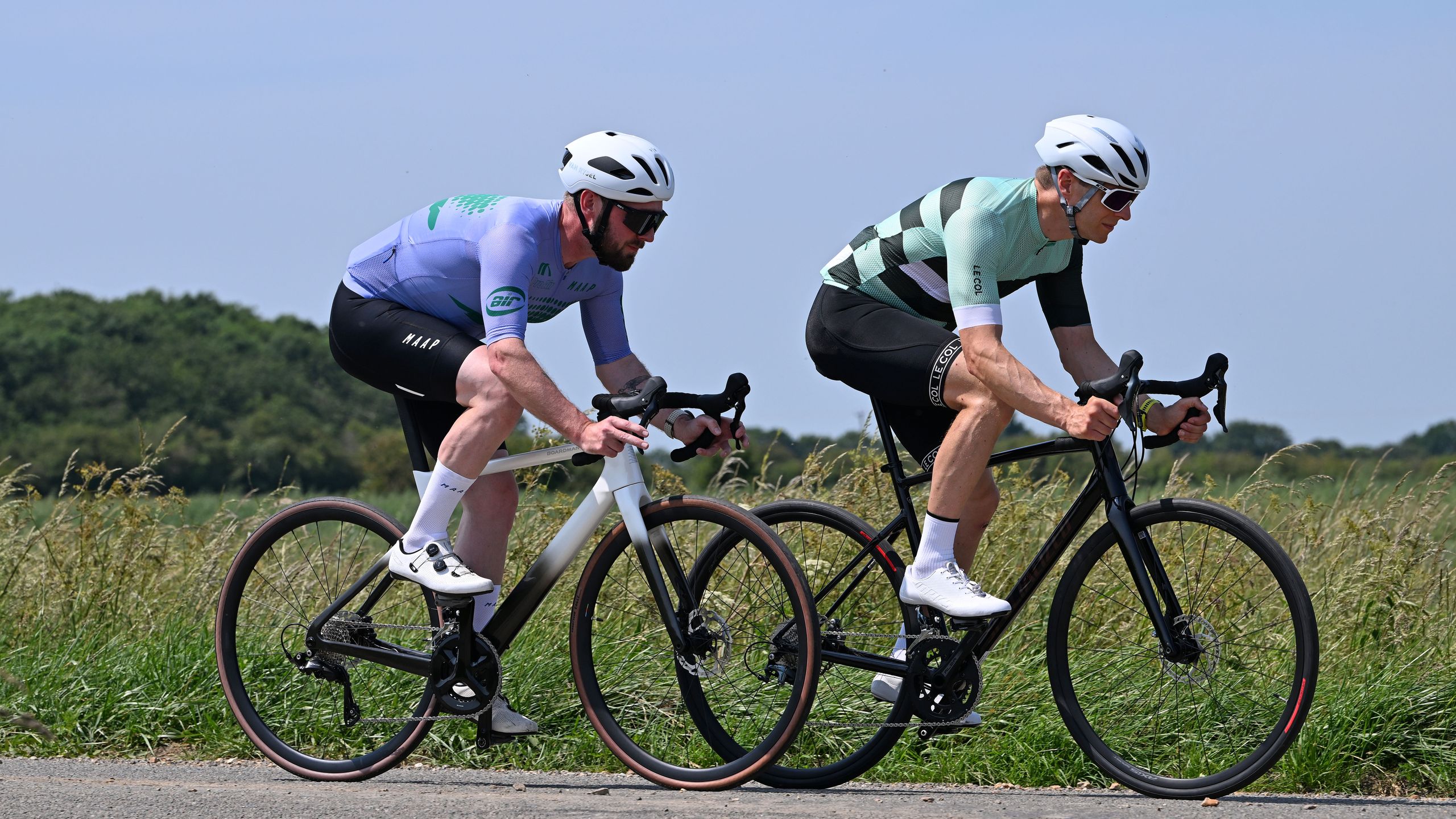
Best budget road bikes 2026: 6 expert-rated and tested road bikes to get more performance for less
Tested by experts, our pick of the most affordable and cheap road bikes available, and a guide to how to choose the right one for you
The quality of today’s budget bikes has vastly improved from years past. With plenty of trickle-down technology present from more expensive models, you can now expect to enjoy a balance of quality materials and impressive performance attributes without having to overspend.
The best budget road bikes are a great starting point for those new to the road. These entry-level machines boast similar features associated with the best road bikes, namely a lightweight frame, drop handlebars and a 2x groupset. From here you can begin to explore longer riders, join a cycling club or even contemplate pinning on a number.
Whatever your goals, we’ve selected six of the most capable budget road bikes from the numerous we’ve tested. All have been put through their paces and have been chosen for their blend of ride quality and value for money, with each featured bike under £1800/$2400, including our top pick, the vastly impressive Giant Contend SL.
If you are just getting started in cycling or looking to upgrade your kit to match your new bike, why not check out our dedicated guides to the best budget bib shorts, the best budget helmets and the best budget cycling shoes.

The Contend SL from Giant keeps things simple, as budget road bikes should, and in doing so, has ticked a lot of boxes.

Decathlon has built such astonishing value into the Triban 520 that it is awe-inspiring. That is on top of a bike that ticks a lot of boxes and is an excellent all-rounder.

The Allez Sport is a good stepping stone on the road to a full-fat race bike; it's exciting and engaging, but great for those who need a little more practicality.

Boardman is a small UK brand that has to try harder to stand out. In doing so, it has knocked it out of the park with the SLR, cramming so much value.

The Domane AL range offers numerous practicalities, ample tyre clearance, and looks fantastic. However, it is a bike that lacks a bit of zest compared to other budget options.

Another bike where the frameset is the star, the CAAD Optimo is a well-rounded offering and proves that rim brakes aren't dead just yet.

Our expert review:
In a market dominated by carbon and Direct-to-consumer brands, the Giant Contend SL 1 highlights the value of a well-made alloy road bike. Retailing for well under £2k/$2.4 and weighing 9.5 kg, I found it offers good value specs, solid performance, and versatility.
Built on a Giant ALUXX SL-grade alloy frame with a full carbon fork, it has a balanced geometry suited for both sporty and endurance riding. It’s quick but stable thanks to a well-balanced 412 mm chainstay, and the Overdrive steerer offering precise steering input, although that does make feedback noticeable on rougher roads. Shimano’s 105 12-speed groupset handles shifting smoothly, and the non-series chainset is adequate. Hydraulic brakes with Giant rotors offer sharp stopping.
The tubeless-ready P-R2 wheels, paired with Gavia Fondo 2 28mm tyres, are durable yet not overly plush, offering a clear opportunity for upgrades. The composite D-Fuse seatpost smooths out road buzz; however, the saddle, Giant’s Approach, may not be ideal for everyone due to its slightly more traditional long shape.
What makes the Giant stand out is, without a doubt, its lively and playful handling, especially once the front is lowered; I found it remains stable on descents and through tight corners, without kicking back if you get it wrong. Overall, the Contend SL 1 shows you don’t need carbon to enjoy riding.
The Contend SL 1 was part of a four-value road bike group test under £1800/$2400

The Triban 520 offers a great value package including Shimano 105 shifting and disc brakes
Our expert review:
Reviewed by Joe Baker - CW Tech Contributor
Rebranded and redesigned, the aluminium frame now comes with a carbon bladed fork. The Triban 520 has also switched to disc brakes in the form of TRP's well regarded HY/RD mechanical offerings. And amazingly, for a bike of this price, you also get Shimano 105.
The frame's geometry places the 520 clearly in the endurance/commuter/light tourer camp. Think generous stack height and shorter top tube. If you're looking to get 'long and low' then this probably isn't the bike for you. However, if you favour comfort and stability over speed and need a bike that can handle the trifecta mentioned above then the 520 is well worth further consideration.
Its credentials as a solid all-rounder are deepened by both the tire clearance and the rack and mudguard mounts. The bike comes equipped with 28mm tyres. However there's room for up to 36mm of rubber should you want to hit the bridleways or dirt roads or fancy attempting an audax ride or two when comfort is paramount. Add guards (fenders) and a pannier rack and the 520 is ready for daily commute duties or some multi-day touring. Versatile indeed.
As mentioned earlier the bike's greatest asset might just be that 105 groupset, a favourite of mine thanks to its reliability and functionality. However it's worth noting that this isn't a full 105 set-up. To help keep costs down Decathlon has opted for a Shimano RS510 chainset and a Microshift cassette. While they'll add a little weight they shouldn't adversely affect performance. As for the gearing you get a compact 50/34t chainset paired with an 11-32t cassette. The result is a decently low gear that helps negate some of the bike's weight when climbing the steep stuff.
Read Joe's full Triban RC520 road bike review

Our expert review:
The Allez Sport features a Tiagra 10-speed mechanical groupset and a multitude of in-house components, similar to those found on the Domane. However, that is where the similarities end. The Allez name carries a legacy of high-performance road bikes, and this model truly lives up to it.
Specialized has expertly tweaked the Roubaix geometry to create a balanced, fun, and eager ride. A slightly shorter wheelbase makes it feel significantly more responsive and direct than the Trek, despite similar trail values. While it may not be as sharp as the Allez Sprint or older versions, it serves as a great stepping stone to a more responsive bike or an excellent choice for those seeking excitement with added practicality.
Overall, the Allez Sport’s well-judged handling and vibrant colour scheme make it a more engaging and special ride compared to the Trek.
The Allez Sport was part of a four-value road bike group test under £1800/$2400

Our expert review:
It is hard to ignore the Boardman SLR 9.0's looks! It certainly features a lot of high-end features, and with it, the looks as well. The full carbon frame, fork, and steerer, along with that stunning off-white to metallic black fade, really caught my eye.
The value in the specification is somewhat mind-blowing. The Prologo Scratch M5 saddle felt spot on, and those GoodYear Sport 30mm tan-wall tyres are standouts – I had absolutely no punctures in any conditions. The Alex wheelset looked the business, remained true, and spun smoothly throughout testing. Additionally, they're tubeless-ready, which is a significant advantage.
I found the D-shaped seat post to be really compliant, and the two lay-back options were a nice touch, which you rarely see in more budget offerings. The cable routing is done via a two-piece cockpit with a fairing, which is a decent compromise, offering flexibility without hindering the smooth action of the Shimano 105 mechanical groupset. This reminded me how excellent modern mechanical shifting is.
Despite its racy looks, I was pleased to find a wealth of practicality, with cleverly concealed mudguard mounts and extra bottle bosses. The ride quality was spot on, no jarring at all, and out-of-the-saddle efforts felt solid. While the handling was a tad neutral in terms of feedback, it was never boring – perfect for a spin with friends or chasing a sportive PB. The SLR 9.0 attempts to accomplish a multitude of tasks, and it does so with little fuss.
The Boardman SLR 9.0 was part of a four-value road bike group test under £1800/$2400

Our expert review:
The Trek Domane AL4 proves itself as a competent bike, excelling in reliability, practicality, and comfort for long sportives or slightly more adventurous rides. From a tester's perspective, it's Shimano 10-speed Tiagra groupset and ample mounting points underscore its readiness for diverse journeys.
Handling feels self-assured and straightforward, instilling confidence, particularly for those expanding their horizons in road cycling. Many components are reliable Bontrager in-house brands, including a bombproof wheelset and incredibly durable tyres. That said, a future upgrade to premium tyres and wheels could significantly enhance the ride feel. I was surprised by the well-padded, contemporary saddle, which perfectly complements the bike's upright riding position, improving comfort.
You have to pinch yourself from time to time to remind yourself this is a budget road bike, given the Domane's premium look. However, the integrated cable routing presents a puzzling design flaw, resulting in excessive friction and complicating the initial setup.
Despite this, once I got it all set up, it's a very competent, practical, and good-looking bike, easy to live with and enjoy across various settings. It’s a steady, solid choice for building confidence or embarking on long adventures.
The Domane AL4 was part of a four-value road bike group test under £1800/$2400

A solid all-round road bike for those on a budget
Our expert review:
Reviewed by Greg Kaplan - CW Tech Contributor
The Optimo 4 is an entry level aluminum road bike that’s well suited to those who are buying their first drop bar road bike or for any cyclist operating on a tight budget.
It’s built around a frame that uses Cannondale’s SmartForm tech, which is designed to balance strength and weight, with the addition of a carbon fork to hopefully reduce some of the road chatter. There are dropped seat stays here too, again used to add some compliance. In reality, the ride quality was pretty firm, and you’re getting plenty of feedback on all but the smoothest surfaces.
As for the geometry, the stack and reach are a good match for newer road cyclists, being relatively high and short to allow for a more upright riding position. Tyre clearance is pretty tight, due in part to the use of rim brakes. The inability to fit tyres wider than about 25mm also impacts the level of comfort, as do the tyres themselves; Vittoria Zaffiros are good at preventing punctures but sit on some relatively heavy alloy rims and their lack of suppleness is apparent.
It’s the style of brake that’s likely to put many off the Optimo, especially as discs are now pretty much standard across all road bikes. Unsurprisingly we found the brakes here lacked the power of discs, but weren’t by any means squishy.
To help keep the price down, the Optimo 4 is equipped with an 8-speed groupset comprising Shimano Claris shifters, mechs and cassette with a 50/34 FSA Tempo crankset. We found that the shifting was crisp throughout our review period but there were significant jumps between the gears, which at times played havoc with our cadence. However this might not be such an issue for less-experienced cyclists, especially if the bulk of the riding is done on flatter roads.
Read Greg's full Cannondale Optimo 4 review
It is our dedicated team of testers here at Cycling Weekly, whose job is to review a wide range of cycling products and write objective reviews based on their daily experiences with them in various conditions.
With extensive experience, they're well-placed to compare products, identify their strengths and weaknesses, and provide you with an honest and unbiased assessment of how they perform.
During our testing of the best budget road bikes, we undertake rides of varying lengths and conditions. Typically, these routes will include a variety of flat, rolling, and hilly terrain, along with a mix of road surfaces: from smooth (ish) tarmac to more broken and pitted roads; if the bike allows it from time to time, a little further off the blacktop too. Our testers assess the performance of each bike across several factors, including comfort, handling, and the bike's suitability for long-distance riding or shorter-duration racing. The durability of the components and the bike's overall value for money are also considered, with a particular focus on the latter.
If you would like to find out more about the Cycling Weekly team and How We Test products, visit our dedicated guide.
Andy was the founder of Spoon Customs, where he spent ten years designing and building some of the world's most sought-after custom bikes. In that time, Andy collected plenty of five-star reviews of his own. Making Andy well placed to understand what makes a good road bike, regardless of price. Andy can see well beyond the specification chart, offering unique insight into a bike's handling character.
As an ex-professional, only stopped by his long-COVID diagnosis, Joe has had to find performance on any bike he's asked to ride, or he could afford at the time. While he is now only a contributor and not a full-time team member, Joe has tested and continues to ride some of the fastest bikes in the world. He's one of the few cycling journalists who've ridden bikes professionally, so he absolutely knows how to put a bike through its paces.
If you’re searching for the best budget road bike for you there are a number of considerations to take into account. While the lower price point will reduce your choices to some degree, it’s still a highly competitive sector, with plenty of options. Answering a few questions about your requirements before you go shopping should help you to narrow down your selection. With that in mind we’ve laid out a few areas to consider to help you better navigate the buying process.
Size & geometry
It’s imperative that you get a bike that fits you correctly. Too big or too small and you will compromise comfort as well as pedalling efficiency. Rather frustratingly there isn’t a standard sizing across all the brands, so you’ll want to try before you buy (see below). Consider both the stack height and the reach, with both combining to impact your riding position. If you’re having to lean too far forward then a smaller size could be required. Similarly, a too upright position, with your knees feeling restricted as you pedal indicates a frame that is too small.
To a degree riding positions are subjective, so you’ll want to opt for a bike with a frame geometry that allows you to find and maintain an optimal riding position that balances comfort, power and control. Knowledgable bike shop staff can assist here.
Frame material
At the budget end road bikes are more often than not made from aluminium. It’s a perfectly good material, and when used well, can produce some really great road frames that balance weight with stiffness. It’s durable too, and, due to its lower costs, is a favourite of amateur crit races who don’t want to risk a carbon frame in such an environment. Look for carbon forks to go alongside the alloy frame, which help reduce weight and can help improve the ride quality.
If you do find a carbon frame in this price range it’s worth approaching with caution, although the Boardman featured in this guide is proof that you can get a quality carbon bike in this category. A budget steel frame is likely to be heavy and lack many of the attributes that make high-end steel road frames a pleasure to ride.
Tyre clearance
The wider clearances typically seen on today’s road bikes, aided in part by the move to disc brakes, allows you to enjoy the benefits of wider tyres, namely improved comfort and traction, due to being able to run them at lower pressures. The ability to fit wider tyres - say 30 or 32mm - also makes the bike more practical, allowing you to tackle poorer road surfaces and even light gravel with greater confidence.
Mounting points
If you’re planning on using your bike year-round then choosing a frame with mounts for mudguards (or fenders) is a good move. If you’re looking to use the bike as a commuter as well then further mounts for a rear rack could prove handy.
Groupset
Again, your budget will dictate the type of groupset used in the build. But there will be some differences, as shown in this guide, where the number of gears ranges from 8-speed to 12-speed. More gears doesn’t just mean a bigger range but also smaller jumps between the gears, which helps your cadence. A groupset such as Shimano 105 is a proven winner, featuring plenty of tech used in the brand’s more expensive offerings, and will ensure that you won’t need to upgrade these costly components any time soon.
Try before you buy
By visiting a bike shop you’ll be able to better assess all of the considerations above, as well as get some advice from the shop itself. Better still, visit a number of shops. There’s no substitute for trying a bike when finding the right fit, as well as being able to assess the components.
Cheaper road bikes are almost invariably made of aluminium, due to the low cost of this material. You might occasionally find a lower-quality steel frame. However, by pushing the price tag up further, you will find the introduction of carbon fibre.
Don't assume that alloy is an inferior choice, though, as a well-made alloy frame, like several of the bikes featured in the guide, such as the Giant Contend SL 1 and Specialised Allez Sport, can ride better than a budget carbon frame and may weigh less as well.
At the lowest prices, it is worth looking for those with a carbon fork, as it will usually be more compliant and therefore more comfortable to ride. They also offer much greater lateral stiffness, which helps to keep handling in check and vibrant.
Your groupset is the combination of components that come together to make your gears shift, brakes work, and generally control your bike's features and functions. This includes your shifters, front and rear derailleur and brake calipers.
Shimano dominates the groupset market, especially on lower-priced bikes, where you can expect anything from 8-speed Shimano Claris to the new excellent Shimano 105 groupset. From time to time, you find SRAM Apex if it is a one-by groupset only now.
We are starting to see a lot more using the also brilliant Microshift Sword groupset, in combination with mechanical or mechanically actuated hydraulic disc brakes.
Often, it's common to see further attempts to save costs by not including a full branded groupset, with the chainset swapped out for one from FSA or another brand. That's not necessarily a bad thing, but something to be aware of.
Most cheap road bikes will be fitted with what we call a "compact" 50/34 tooth chainset. Most cassettes at the rear will have a highest gear of an 11-tooth sprocket, giving you a usefully high top gear.
It's now increasingly likely that you'll have a cassette with the largest sprocket, which has 30 or more teeth. Paired with the 34-tooth smaller chainring, that will give you a usefully low bottom gear to tackle most climbs. You may get a 34-tooth lowest gear, which will give you a 1:1 lowest ratio, which is great for steeper uphills.
Some cheap road bikes will stop at 28 teeth or even 25 teeth in their largest sprocket. Fitter riders or those who only use their bike on flat terrain may be fine with that, but it can make climbs hard work if you're a beginner.
On the other hand, with smaller jumps between gears, you may be more comfortable with a closer-ratio cassette, as it will better allow you to choose an appropriate gear for the terrain. There can be quite large jumps on a wider ratio cassette, and lower spec groupsets may give you clunky shifting between them.
It's worth checking, but most modern rear derailleurs will let you fit wide-range cassettes, so even if your bike comes with an 11-28t cassette, it might be possible to swap it for an 11-32t cassette if you do want more gear range.
Disc brakes are now the norm on road bikes. They offer more consistent braking in wet weather than rim brakes, are usually more effective and they reduce wear on your wheel rims.
Higher priced bikes include hydraulic disc brakes, but cheap road bikes will usually have mechanical disc brakes fitted. These give less efficient overall braking than hydraulics, but retain the all-weather abilities of disc brakes. They're also easier to maintain than hydraulic disc brakes.
Lower priced bikes may still be fitted with rim brakes. These offer less bite than disc brakes and are less effective in wet weather. Often, the brake pads are the weakest link though. It's inexpensive to swap to better quality brake pads and this may significantly improve braking performance.
With rim brakes, there's a limit to how wide a tyre will fit in the brake caliper. That means that rim brake bikes are often fitted with 25mm wide tires, although you may see a 28mm tire.
One result of the shift to disc brakes is that there's much more room for wider tyres. Many disc brake bikes can fit 32mm tyres or even wider. That allows you to drop your tyre pressure, resulting in a more comfortable ride. It may even be faster. A budget disc brake bike will typically be equipped with 28mm tires.
There are a number of ways to gauge saddle height, but the simplest by far is the LeMond saddle height formula. It is a simple as taking your inseam measurement in centimetres and multiplying it by 0.883. This gives you a starting point for setting your saddle height, measured from the centre of the crank spindle to the top of the saddle. Use your judgment, though. If the saddle is within a couple of inches of the top tube, you might want to size down; if you are at the minimum insertion, you might need to size up.
This very much depends on your perspective. On the one hand, yes, the price is going up and up every year, and sure, specifications on paper are getting worse. However, if you consider that a £1000 road bike now only has Shimano Tiagra, versus maybe 10 years ago, when that was once 105. Consider that, 10 year 10-year-old 105 was 10 10-speed with caliper/rim brakes. Tiagra is now an 11-speed groupset with hydraulic disc brakes.
In recent years, prices have risen, largely due to external factors affecting everything, not just bicycles. Rising energy costs, shipping costs and materials, all of which are big parts of how a bicycle is manufactured and end up in your hands, have increased bicycle prices to some of the highest ever.
This guide is testimony to the fact that there are still some very good and very affordable road bikes in the market. We also have a similar guide for the best budget gravel bikes.