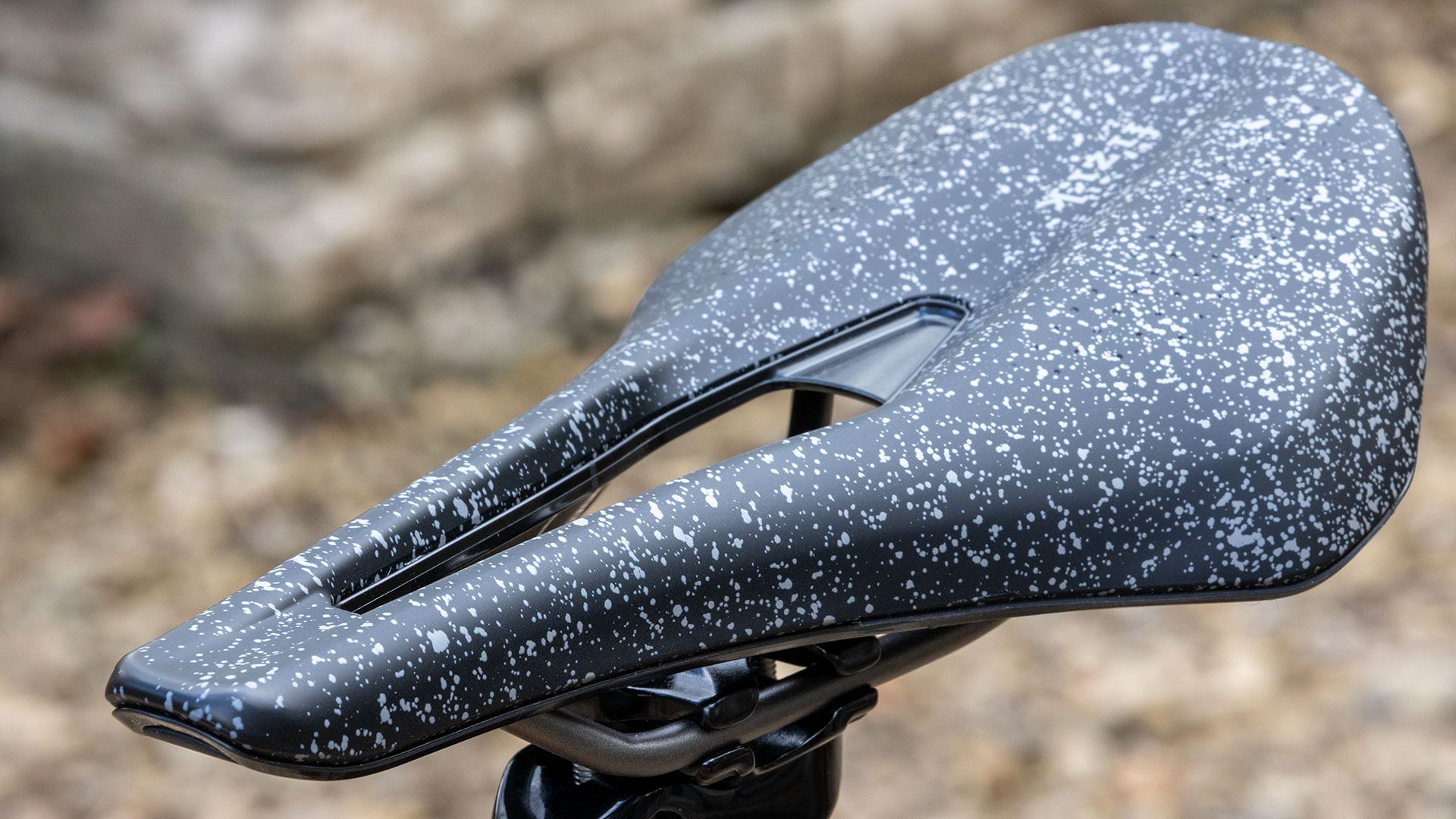
Best bike saddles 2026: Sit more comfortably with these 9 expert-rated bike seats
Choosing a saddle is no easy task, so we have taken the pain out of it by bringing you 9 of the best, all rated and reviewed by our experts
No two cyclists have the same anatomy, and that's before you factor in the different bike types and disciplines that shape the best bike saddle design. Because comfort matters so much to rider enjoyment, it's imperative to get it right.
First, a bit of housekeeping: men's and Women's saddle requirements differ significantly. While this guide covers both, we also have a dedicated guide to the best women's saddles. Because this is such an in-depth topic, it is worth looking at our guide to choosing the best bike saddle for you.
Our testing isn't just about breaking down specifications; it is real-world insight into how shape and design can affect your riding experience. Our experts' efforts yield 9 of the best bike saddles, with the Fizik Antares Versus Evo as our overall winner, which we found superb at delivering comfort across the board. Saddles overlap considerably, and while we offer a comprehensive guide to the best gravel saddles, models like the Ergon SR Allroad excel across several disciplines.

The Escher-inspired structure of 3D-printed saddles might not look like much but they can offer incredible comfort and support
Our expert review:
Reviewed by Luke Friend - Tech Contributor
The Fizik Antares Versus Evo R3 Adaptive saddle features the Italian brand's 3D-printed padding, which creates a distinctive honeycomb appearance. This creates what Fizik calls 'zonal cushioning', which varies in firmness, to better conform to the rider's shape.
It also includes a pressure-relief channel, a carbon-reinforced nylon shell that adds flex, and 7x7 kium hollow rails. Together, these features bring the saddle to just 217 grams in the 139mm width I tested.
I found the zonal cushioning and relief channel performed well and offered excellent comfort. Despite its appearance, the holey design was much easier to clean than anticipated. The only downside to the adaptive Antares saddle is the price, which sits at nearly £300/$300.
Read Luke's full Fizik Antares Versus Evo R3 Adaptive saddle review

High-rebound foam on the SR Allround makes it an excellent companion for all-day mixed terrain rides
Our expert review:
Reviewed by Tyler Boucher - Tech Contributor
Although you can use a road saddle for off-road riding, and many gravel bikes come fitted with a road model, a gravel-specific saddle design offers benefits.
The Ergon SR Allroad saddle includes a layer of high-rebound foam between the upper orthopaedic foam layer and the saddle base, designed to improve shock absorption. Ergon offers two widths and versions with lighter rails and a lighter base than the Core line, which weighs 288g.
Although marketed as a gravel saddle, I rode it on an all-road bike, where the extra padding was easier to isolate than on a fatter-tired machine. After switching saddles, I could feel less road buzz coming through the bike. It’s not massive, though.
Read Tyler's full Ergon SR Allroad Core saddle review

With high-end shapes and ergonomics, the Verse is a great example of trickle-down tech
Our expert review:
Reviewed by Matt Ischt-Barnard - Tech Writer
I've used Fabric's iconic Scoop saddle for many years with little to no issues. However, after a few longer bikepacking trips, I started to notice some numbness creeping in. At the time, I assumed it was because I was seated much more than usual and just had more ride time. After some research, I decided I might need a shorter nose.
On paper, at least, the Bontrager stood out. Its short 250mm overall length, neutral shape, and cutout suggest a lot of tricked-down tech. After just over a year with the Verse Comp, my numbness seems to have disappeared. Thanks to the decent saddle padding, I found I could use a thinner, cooler chamois in warmer weather, which eliminated some of the soreness I get in those conditions.
It took some time to get used to the Verse, which is a very different shape from the more traditional Scoop. This may also be because it is the most affordable version, and the materials are slightly less forgiving. The lack of compliance in the base and rails was certainly noticeable compared to my more premium Fabric saddle, and largely why the Verse weighs nearly 300 grams.

Another addition to the growing range of short-nosed saddles
Our expert review:
Reviewed by Simon Fellows - Previous Tech Editor & Contributor
The Tempo Argo R3 is a very contemporary-looking saddle, defined by its somewhat brutal aesthetic. Its short 260mm length and very wide, blunt nose give it an almost brutalist finish, with flexible, rubberised wings and a large diamond cut, all designed for comfort, control, and security when 'on the rivet'.
Put fairly crudely, the Tempo Argo saved my butt. While away on another press trip, this time in Girona, the home of European gravel. I was invited on a relatively long 6-hour ride with many hills to showcase the brand's new endurance bike. Some way into the ride, I noticed no one was complaining about discomfort, including me. I made sure the name Fiziki Tempo Argo R3 was etched into my memory.
The R3's are wide; even the narrower 150mm variant I tested feels wide. However, thanks to Fizik's WingFlex design, which deserves a lot of credit, it provides decent support for an upright endurance position without causing any chafing or discomfort.
Read Simon's full Fizik Tempo Argo R3 Les Classique review

A good saddle for people who like to love around on the bike
Our expert review:
Reviewed by Michelle Arthurs-Brennan - Digital Editor
The Romin Evo is a long-nosed saddle, suited to riders who like to move around on the bike, sit on the nose during efforts, and shift their weight back on the climbs. The saddle comes in three widths (143mm, 155mm, and 168mm; I tested the latter), which should give most bodies plenty of choice.
An ample cut-out is a necessity for me, and this one did the job, despite being relatively narrow. Specialized calls it 'level 2 padding', and after testing on rides well over four hours, I found it sufficient. The upper is made from a water-resistant Micromatrix material that is resilient and aesthetically pleasing.
Read Michelle's full Specialized Romin Evo Pro saddle review

The Power has proved a hit with many riders male and female
Our expert review:
Reviewed by Anne Marije-Rook - North American Editor
The Specialized Power kicked off the short-and-stubby trend that has since led nearly every saddle brand to launch its own version.
With a wide profile and sizable pressure-relieving cutout, I'd suggest this is best suited to riders in an aggressive position or who spend a lot of time in the drops. A commonly reported downside of the Power is that the rear fans out and can rub against some riders' hamstrings; if that is the case for you, we'd recommend the Power Arc, a variation that avoids this with a more rounded rear.
Overall, the Power saddle has attracted many converts across the Cycling Weekly team. It might not be everyone's absolute favourite, but it's rare to hear a rider say it's uncomfortable. If you like to lock yourself into a set position on the bike, I think it's a solid option and well worth a try.
See our guide to all the best women's bike saddles.

Our expert review:
Reviewed by Simon Fellows - Previous Tech Editor & Contributor
Prologo's Dimension range is very similar to Selle Italia's Flite range: while several variations are slightly different, they follow a similar design philosophy. Need a saddle for Gravel or Cross? That's the Dimension AGX. Something a bit wider? The Dimension Space. A saddle specifically for women? That'll be the Dimension EVA.
So, where does the R2 Nack fit in?
With a carbon fibre construction and minimal padding, the Dimension R2 weighs a claimed 135g (139g measured), making it the range's lightest option. That’s about the same weight as half a baguette but infinitely more comfortable and considerably more robust. It also puts it up there with the Cadex AMP, which only saves it 4 grams over the Prologo.
What sets the R2 apart from other short-nosed saddles I have tested is that it not only lets you rotate right over in relative comfort, but it also brings some security back into the equation. Overall, the R2 is light, comfortable and keeps your posterior happy, whatever your chosen discipline.
Read Simon's full Prologo Dimension R2 Nack review

There is a lot to be said for a pressure relief channel
Our expert review:
Reviewed by Rachel Sokal - Tech Contributor
Given Selle Italia has around 16 versions of the Flite saddle, it's no surprise that a gravel-specific version has been added to the range. After taking some time to understand the range, you soon realise the Flite gravel combines features best suited to longer drop-bar off-road rides, a sort of merger of the Flite's Endurance and MTB versions.
I was really impressed by the comfort of the Flite; the Superflow shape and width options meant the weight sat through the sit bones where it should be. I found that the shorter length (250mm, standard across all Flites) allowed good movement around the bike, although it means your weight isn't so far forward if you want to perch on the nose of the saddle on steep climbs.
Read Rachel's full Selle Italia Flite Boost Gravel TI 316 Superflow review

Despite being only 242mm long, the Amp feels like a much longer nosed saddle
Our expert review:
Reviewed by Anne Marije-Rook - North American Editor
Anyone's initial impression of the Cadex Amp saddle will undoubtedly be its low 131-gram weight. However, its sleek design, raw carbon material, and exquisite craftsmanship are also profoundly appealing.
My scepticism of its “unisex” claims was certainly short-lived. From the very first ride, the Amp was super comfortable. Combined with the carbon fibre construction, the foam forms a great, supportive shape that helps dampen any road vibration. Even after decades of riding, and partly because of some of the challenging events I have taken on, I still get sore. The Cadex's heavily curved and quick drop-off wings effectively minimised friction. During testing, I never thought I would need to stop using it.
Read Rook's full Cadex Amp review
Testing saddles, helmets, shoes, and certain types of clothing is especially challenging, making it hard to provide an unbiased assessment. As I have mentioned several times in this guide, selecting the right saddle depends on your body's anatomy, riding style, and flexibility. This means a saddle that fits one rider may not suit another.
While testing, our reviewers aim to cover not only each saddle's specifications but also how its shape and design affected their experience. They also consider how a different bike style or distinct anatomy could affect your ride.
One thing is certain: the Cycling Weekly team tend to put themselves through a reasonable amount of pain while testing the best saddles. Especially if a saddle isn't suited to them. When selecting saddles for review, we follow the same process you would, making sure the saddle suits the reviewer. Not just so the saddle can be reviewed, but first to avoid putting them through too much pain, and because they'll be best placed to illustrate their feels and offer decent comparisons.
In conclusion, we strive to discuss our experiences with similar or identical saddles as a team whenever possible. Our team continually tests various new bikes, including these saddles. This approach helps reviewers better understand which saddle may suit different riders.
After the 352-mile Unbound XL and all the subsequent training to even make it to Unbound, Rook had pretty much had enough of her favourite Ergon SR Pro women’s saddle. In recent years, Rook has started to branch out again, testing newer, mostly shorter options. However, its Rooks relentlessness, when even on off days she rides some kind of bike, that means her testing miles are some of the most valuable in the team.
Michelle is Digital Editor of Cycling Weekly and a NCTJ-qualified traditional journalist by trade. Prior to welcoming her daughters to the world, Michelle raced anything that had drop bars, and she could ride fast, on the road and on the track, and competed in numerous time trials. Which inevitably meant a different saddle for each discipline. While there are a number of great female-specific options now, Michelle remembers a time when that just wasn't the case, spending many years negotiating the minefield that was finding comfort in a world that didn't cater for her needs.
While Simon no longer steers the ship that is Cycling Weekly's tech coverage he does still ride a lot of bikes and still has a lot to offer readers and continues to contribute with reviews and his knowledge. Simon is tall, which means even on more relaxed geometry bikes he still has to adopt a reasonably sporty position, making him ideal for putting to the test narrower, shorter and cut-out offerings.
Rachel has been writing about and reviewing bike tech for the last 15 years or more. Cynical by nature, Rachel chooses to put things to the test herself and leaves no stone unturned. While regularly found on gravel and even road bikes, Rachel's first love is mountain biking, where she has been European and UK 24hr Champion on multiple occasions. Given the demands on your body, this racing has taught Rachel a thing or two about being in the saddle for a long time.
Finding the perfect saddle for you can be a bit of trial and error.
Diagnose the issue: Try to determine what you dislike about an existing saddle. Are there key aspects that don't seem right? If so, use those to determine what needs to change.
Riders who spend more time in an aggressive position often need a pressure relief channel or a shorter nose, while those who desire the freedom to move around frequently favour a longer nose.
Determine your Sit Bone width: This can be done so simply at home with a piece of cardboard and a pen.
Place your corrugated piece of card on a hard chair or surface with your knees at 90 degrees and feet flat on the floor. Firmly imprint. Once you are sure it's imprinted, use a pen to mark the centre points of the imprints and measure. Most brands will offer a conversion of sit bone widths to saddle measurement.
Think about your riding style. Flexibility, how you sit on your bike, and the bike you ride all greatly impact saddle choice. If you ride a Gravel bike with a fairly level bar-to-saddle set-up, you are unlikely to need a saddle designed for a very aggressive position.
Ask a friend: Why not ask to borrow a friend's bike for a short ride? Chat with them about their measurements and see how they differ from yours. Ask what they like about their saddle, and why they chose it.
Shop Around: Look for models suited to your riding style, level of flexibility, and anatomy. Ideally, seek out brands that offer a proper fitting process, such as Selle Italia's Idmatch or Specialized's Retul digital saddle sizing, which can be found in stores across the country.
Alternatively, look for brands that offer test saddles from dealers. Fizik and ISM both offer this service.
Check the returns policy: It is so important - some companies will allow you to buy a saddle to try it out and swap it for another if you are not happy with it within 30 days. This is very useful for testing a few options.
If you want to learn more about this topic, check out Digital Editor Michelle's guide on choosing the right saddle.

Getting a bike fit can be a great way to get help in the pursuit of the right saddle
Discomfort in the saddle varies between riders, but among male riders is often the result of a saddle that is too narrow.
We all have different-width ‘sit-bones’. The ischial tuberosities are the parts of your body designed to bear your seated weight. Most cases of saddle-related discomfort arise because the load is carried on the soft tissues between the sit bones rather than by the bones themselves.
Also, bear in mind that the perceived width of your rear end has little to do with the actual bone structure. Good bike shops, and some brands, offer test ride programs so you can try before you buy.
A common misconception is that more padding equals a comfier saddle. If this were the case the people who spend the most time on bikes -Tour de France riders - would be using veritable lazy-e boys.
The reality is that padding deforms and creates more contact, so on longer rides, it can be less comfortable. Thick, soft padding may initially seem like a good idea to alleviate saddle discomfort, but often a squishy saddle will just compress down under the sit bones and push up in the middle, shifting the pressure from your sit-bones to the soft tissue in-between.
Can a saddle be too firm though? Some riders (male and female) ride bare carbon saddles and get along fine. This isn't for everyone, but it does highlight that far more important than padding is shape.
To maximize comfort you should aim to get a saddle that is the right shape for your style of riding and sit bones.
The UCI now has a minimum saddle length of 240mm. Compared to more traditional saddle lengths of around 270mm and above, you should be able to work out what is considered short and long. In reality, the crossover occurs around 160mm, as the design changes slightly. Saddles above this threshold tend to narrow and become less blunt-nosed.
As with everything regarding fitting yourself on a bike, there are a number of factors and no one rule for all. With saddle length generally trending shorter nowadays, it is considered that most can benefit from this trend. However, it all depends on how you sit on your bike, where the pressure points are and your overall posture. While there is some truth in how 'aggressive' or the level of saddle to bar drop a rider has depends on whether you go short or long, it is certainly not that simple.
Many bike shops have what we like to call 'bum-ometers' (we just made that up). These are devices that you can sit on and feature a memory foam. Your sit bones leave an impression in foam, the width of which can be measured.
A general rule of thumb is that the saddle width should be sit bone width +2cm. Specialized and Bontrager both produce devices like this to measure your sit bones and these are often available to try in your local bike shop.
Alternatively, if you don't have access to a bum-ometer you could always improvise with some Playdoh and a sheet of paper or a piece of cardboard. It's an important thing to remember that a bigger derriere doesn't necessarily mean you have bigger/wider sit bones.
So you've measured your sit bones, you're happy that your saddle is flat enough and the padding is good, but you still feel discomfort. The solution? You may need a cut-out.
Cut-outs and relief channels come in all shapes and sizes, and the best way to see if you'll benefit is to try one. Cut-outs and channels can relieve stress on soft tissues in your delicate areas. If you repeatedly experience discomfort this might be for you.
Is it bad to have a cut-out if you don't need one? Many people who don't need a cut-out comfortably ride saddles with cut-outs with no problems. However, some people find that cut-outs can increase pressure at the edges, or pinch delicate skin.
The rails of a saddle create a frame under the seating area that fits into the clamp at the top of your seatpost. Most modern bikes conform to the same standard, so any reputable saddle will fit any reputable bike.
Rails are one of the main areas that affect saddle price. Entry-level saddles have steel rails, and the further up the price bar you move, the more you encounter manganese, titanium and carbon. As you progress through the materials, they get lighter and more expensive.
Carbon rails are the most expensive and the lightest. Carbon and titanium are also slightly more forgiving than steel, allowing for more comfort.
The important thing to remember is that the basic steel railed model will often have the same shape as the top end carbon-railed version.

Time trials saddles might look odd but for good reason
Riding in a time trial position requires most riders to be 'on the rivet'. This can mean the rider has a forward rotated pelvis, with the sit bones typically up, off the saddle surface.
In this forward position, the pubic bone and other soft tissues become weight-bearing. Triathletes and time trialists tend to favour special saddles that have effectively had the nose chopped off, like the Fizik Tritone or a double-nosed saddle like the ISM range.
This also enables pro riders to push the saddle further forward on the rails, as there is a current (arguably outdated) UCI rule that limits how far forward the nose of the saddle can go.
Remember, changing your saddle can change your saddle height. If you get a new saddle, it is worth re-measuring your saddle height. It's also a good idea to check that the saddle is sitting at the correct position on the rails - getting this wrong can lead to discomfort elsewhere, such as knee pain.
Hopefully it goes without saying, but the shorts you'll wear on the bike make a difference to your overall comfort, too.
If you are regularly suffering from discomfort on the bike, make sure that you've invested in a good quality, properly fitting pair of cycling specific shorts before you blame the seat.