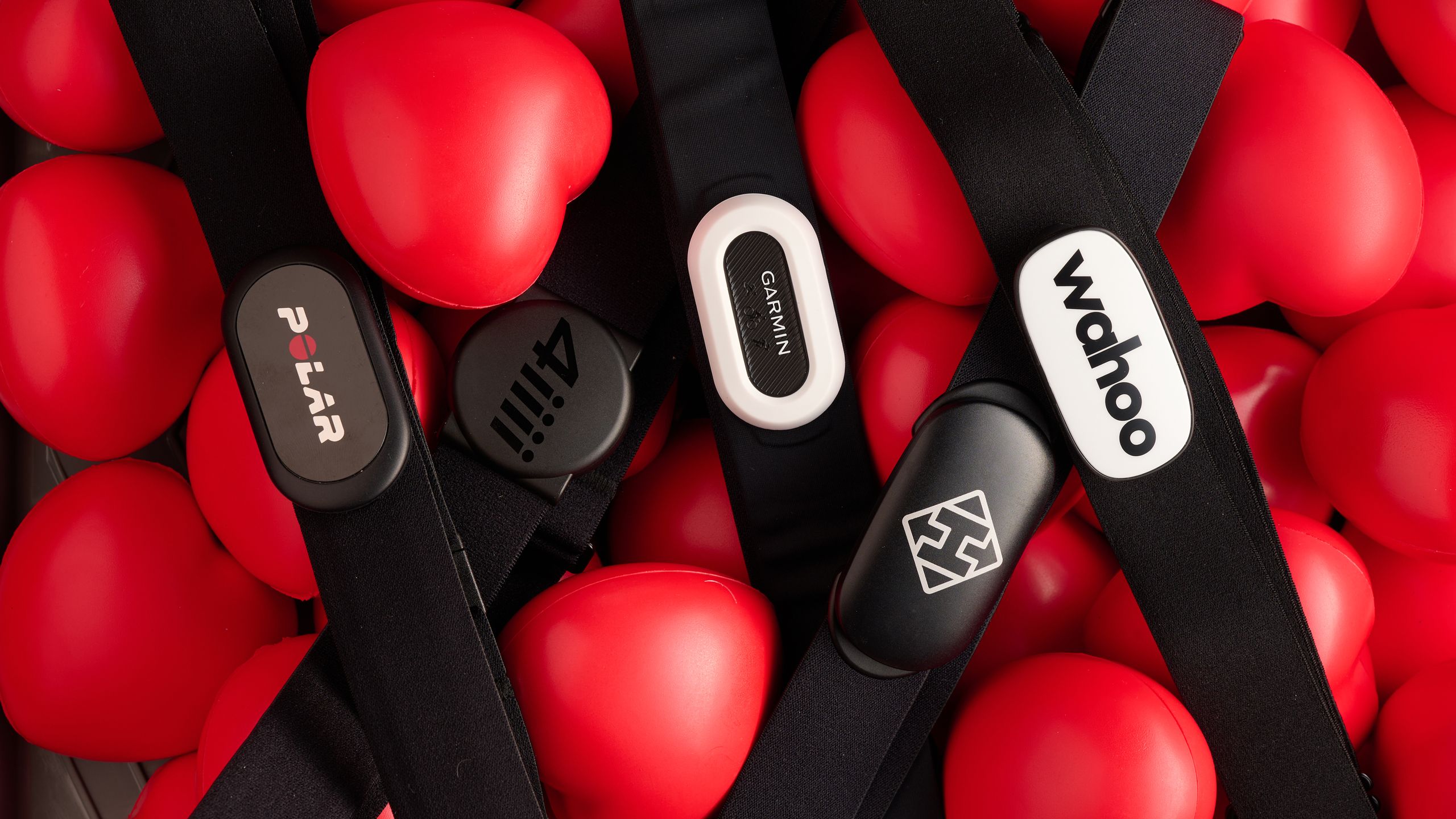
Best heart rate monitors 2026: 5 Editor-approved picks after thousands of indoor and outdoor kilometres
Essential for indoor and outdoor riding, a good heart rate monitor needs to be durable, sweatproof, and never miss a beat
Getting yourself one of the best heart rate monitors represents one of the first significant performance upgrades you can make as a cyclist. Heart rate monitors track your cardiovascular output during your ride, race, or workout, helping you become a better, stronger rider.
The best models will not only accurately track your fitness and fatigue and sync perfectly with the best bike computers, but also predict and detect the onset of illness or rhythmic anomalies. The popularity of heart rate monitors has soared in recent years largely due to the best smartwatches, alongside now being a requirement for many of the best indoor training apps for cycling.
What makes one heart rate monitor better than the next? They need to be comfortable and unobtrusive , but also reliable and consistently accurate. Ideally, you want one that balances performance with durability (water and sweat resistance). While this might come at a price, the upshot is that if maintained properly, it'll last for years.
As someone who trains and races both indoors and outdoors year-round to a high level, I've put most of the top heart rate monitors through the wringer and destroyed many as a result, but only a few have stood out. In this guide, you will find my top 5 HRMs from quite literally years of testing.

Our expert review:
With over a year's worth of testing spanning thousands of indoor and outdoor kilometres, I'm yet to find fault with 4iiii’s Viiiiva heart rate monitor. The whole setup experience is intuitive, and the strap is one of the most comfortable out there in the segment.
The Viiiiva is unique in that the strap connects to the heart rate pod on both sides via a swivel hinge - no snap-stud here. This also means sweat won’t creep into vital contact points and destroy the metal press studs or affect performance, which improves the unit's lifespan.
No heart rate monitor is immune to sweat, though, and you’ll still need to wipe it clean after every ride and handwash the strap in warm water if it gets a bit crusty.
The battery life is excellent, and I'm yet to change the coin cell CR2032 battery - 4iiii pegs battery life at 540+ hours, which could last you between 12 and 18 months depending on how much you ride. While it’s one of the best-performing options we’ve gathered here, if you do need to replace the battery, it only takes a simple flick to open the battery door.
For those who train indoors, ANT+ and BLE connectivity allow you to seamlessly pair it with your favourite indoor training app and cycling computer. What I really like about the Viiiiva, however, is that because it doesn't clip into and sit atop the strap, the flush configuration means it doesn't protrude through your cycling jersey like some of its rivals. Furthermore, it has internal memory to store data locally for activities that don't permit a smartwatch or cycling computer.

Our expert review:
Garmin heart rate monitors have come a long way over the past decade and a half, improving with each iteration and incorporating customer feedback. Like the 4iiii Viiiiva, I’ve spent many hours and thousands of kilometres using the Garmin HRM-Pro Plus and have been impressed by its reliability and water/sweat resistance. It just keeps going thanks to the impressively thought-out design that pairs a high-quality, adjustable strap with an electronic pod.
Unlike its rivals, the electronic pod is permanently wired/embedded into the strap assembly - no press studs here. This means it not only offers superb water- and sweat-resistance, but you can even swim with it thanks to the design's impressive sealing properties. Unfortunately, the battery doesn't last as long as stated (it depends on usage), but the CR2032 coin cell is very easy to replace. Simply clip off the white silicone housing and swivel the quarter-turn door, but be careful not to snag or stretch the rubber O-ring - this will affect moisture resistance and compromise the seal.
As expected of an HRM at this price, it can measure and broadcast both heart rate and heart rate variability via ANT+ and BLE, and it has internal memory. Its electrocardiogram (ECG) gives it highly accurate heart rate data which is repeatable and consistent - no dropouts or spikes. Another great attribute is that it can be used while swimming at depths of up to 50 metres, making it one of the most versatile straps in this test and, still, the best heart rate monitor Garmin has ever produced.

Our expert review:
Wahoo heart rate monitors of old - the Tickr and Tickr X - haven’t had the greatest track record when it comes to reliability, as previous iterations suffered from unreliable performance and terrible corrosion around the press studs that fasten the pod to the strap.
With the new Wahoo Trackr, however, the American company appears to have reversed these issues, resulting in a refined, high-quality heart rate monitor. While it still utilises a traditional electronic pod, Wahoo has improved the strap and contact point interface to ensure accurate and consistent data harvesting.
Where the previous unit could suffer from sweat ingress into the battery housing, Wahoo has introduced a rechargeable lithium-ion battery. This is a significant improvement, but the battery life could be better - 100 hours isn't enough at this price point and is quite frankly the worst in this test. Like the Hammerhead, it also features LED lights to monitor the battery level and pairing status with devices and apps.
In terms of fit and feel, the strap is lightweight, soft to the touch (even after months of use) and among the most comfortable options in this group test. The new hook-and-loop closure system means the strap doesn't connect at the electronic pod like before, reducing stress and wear and tear on the press stud interface.
That said, the pod is bulkier than its rivals and does protrude somewhat from the strap, but this isn’t a dealbreaker. Overall, it’s a significant improvement over its forebear and a unit I highly recommend.

Our expert review:
The Hammerhead heart rate monitor has a lot going for it with an exceptional feature set that will appeal to many cyclists. It’s superlight, mega comfortable, and compatible with all the indoor training apps and cycling computers. It also has blue and red LEDs that indicate the sensor pod's operational status.
The claimed 900+ hour best battery life is the best in class - and like the 4iiii Viiiiva, I'm yet to change the coin cell CR2032 and don't see this happening any time soon. If you enjoy multi-discipline training, the Hammerhead can be used for swimming to a maximum depth of up to 30 metres.
It’s got a similar strap design to the 4iiii but still relies on press studs to secure it. While stud configurations historically fail over time owing to corrosion, I’ve yet to see any signs of wear and tear in this regard, which bodes well for long-term use.
That said, it’s not without its issues - particularly the strap, which Hammerhead will need to address with the next iteration. It doesn't feel or look as premium as its rivals, and the electrodes lack the quality of Garmin, Polar, 4iiii and Wahoo. Despite the great comfort it offers, this unfortunately shows up in the performance stakes, where there are occasional dropouts and spikes.
At £50, however, any foibles are easy to ignore - especially since many of the attributes it offers are truly exceptional and best in class. Overall, Hammerhead has done a good job, but it needs a better strap to compete with the segment frontrunners.

Our expert review:
The Polar H10 is the Finnish brand’s premium heart rate monitor, and it shows in the build quality and aesthetics. There are a lot of great features here, including internal data recording/memory, not to mention a machine-washable strap - something none of its rivals assembled here offers. Like the Hammerhead and Garmin, it’s swim-friendly, too, and can be used at depths of up to 30 metres.
Of the coin cell-powered units here, it's the only model that uses a CR2025 - this is not a downside, but with so many cycling gadgets using CR2032 stock, you’ll need to ensure you have spares on hand, as you can't swap from product to product should the battery need replacing. Battery life, however, is pegged at 400 hours, which should see you through a year of indoor and outdoor activity quite comfortably.
At 60g (strap and pod included), it’s the heaviest heart rate monitor on test, but it does have the best strap design of its peers. Not only is it easy to adjust thanks to the buckle closure and hook-and-loop adjustment, but the silicon grippers keep it securely in place, and the rubberised electrodes deliver accurate and stable readings.
Having used the Polar H10 for several months already, I have found that the press studs and connectors have shown no signs of corrosion yet, thanks to the seamless integration between the pod and strap.
When testing these heart rate monitors, I quite literally spent years acquiring this knowledge over thousands of indoor and outdoor kilometres across almost all cycling disciplines.
The reason for this is to really put the durability of these heart rate monitors to the test. Overall, HRMs have very few functions, and one very specific function. Assuming they're accurate and consistent, which most are these days and something I'm still testing for, durability is likely the biggest factor many will be considering.
This is not something that can be measured with data; this is only something that can be tested through use, sweated on and taken on and off thousands of times.
I'm, of course, also testing for their comfort, connectivity, battery life, and overall specifications, just like any other cycling product.
Aaron is Cycling Weekly's Technical Editor. As the former editor of off.roadcc, tech editor of Cyclingnews and Bike Perfect, digital editor of Bicycling magazine and associate editor of TopCar, he's travelled the world writing about bikes and anything with wheels for the past 20 years - he’s tested hundreds of bikes spanning road, gravel, mountain, and Time Trial.
It's his dedication to racing that sees Aaron cover tens of thousands of kilometres every year in his training both as an esports racer and out on the open road. It's in these training kilometres where the data is most important to Aaron, tracking his progress, and why he relies so heavily on heart rate monitors.
Your heart is your body's blood delivery agent: it pumps oxygenated, nutrient-rich blood to your limbs, and when you exercise, it has to work harder and faster to meet the body's needs.
In a nutshell, a heart rate monitor measures and transmits internal load in beats per minute (BPM), and when used together with one of the best power meters (which measures external load), you can optimise your training zones and track progress in a controlled, holistic way.
The most common use for a heart rate monitor is to record intervals. Interval training means riding short efforts at high intensity, interspersed with rest intervals of easy pedalling. In time, this forces the body to adapt so that the intensity can be held for longer or can be increased.
Intervals can be ridden based on RPE (rate of perceived exertion), power (which measures the actual output of the body in watts) or heart rate (which measures the effect that the effort has on the body).
In an ideal world, power and heart rate are combined to show how much stress is required for the body to produce a given output - but the best power meters are expensive and heart rate monitors allow a rider to know that they're riding the efforts hard enough and the recoveries easy enough.
The intensity required during each interval will vary depending upon its length, but will usually be expressed in a 'zone' which is based on a calculation of the rider's max or threshold heart rate. So when training with a heart rate monitor, the rider just needs to know what BPM they need to hold for each interval to have the best chance at completing the training correctly.
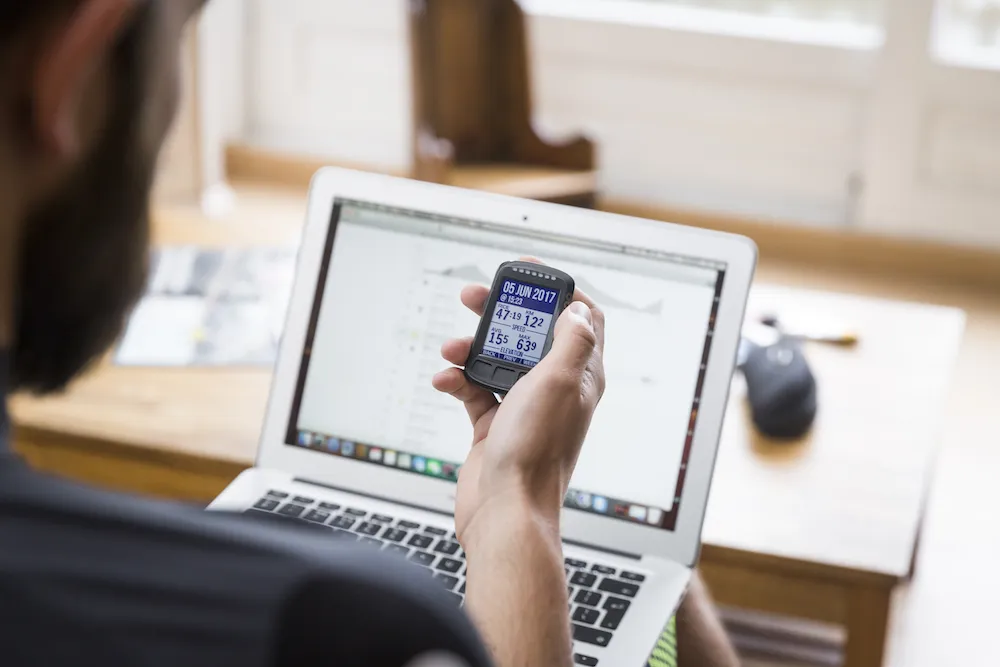
Using heart rate data can help you better understand how your body is performing
Heart rate 'zones' are very individual. The baseline starting point for one rider might be a threshold heart rate of 180bpm whilst it could be 160bpm for another.
However, training forces the heart muscle to become stronger. A well-trained athlete will see their resting heart rate (which is usually measured in the morning on waking up) drop, so tracking this can show your fitness improvements during the year.
Not only that, your resting heart rate often increases during periods of overtraining, or when you're sick. An increased resting heart rate is therefore a red flag which can indicate it's time to take a few days off training.
For data accuracy, especially if you're collecting to analyse later, with a coach or when you have completed your workout, electrical is better. They work by detecting the electrical pulses your heart sends each time it beats. This is why they generally need to be worn around your chest.
If you wish to wear it on your arm or wrist and pair it with other devices, Optical offers greater versatility. This is because the device uses light to pass through the skin and measures how much light is reflected from the blood to determine blood flow, which means they can be worn just about anywhere, as long as they are in close proximity to veins or arteries.
Heart rate monitors typically connect to devices via Bluetooth or ANT+. This allows them to sync with cycling computers, smartwatches, or smartphones for real-time data tracking and analysis.
Bluetooth Smart and ANT+ are common wireless protocols in cycling technology and most heart rate monitors support both.
Compared to ANT+, Bluetooth operates at a higher bitrate to ANT+. This is great for audio streaming but it does have a higher power consumption which has obvious drawbacks for cycling, especially those training for long-duration rides and endurance.
The advantage of ANT+ is that it's much more power efficient and therefore an excellent choice for longer cycling sessions. Plus, ANT+ can be picked up by multiple devices. In theory, you could connect your heart rate monitor to your cycling computer and smartphone simultaneously.
Fun fact: ANT+ is actually owned by Garmin.