Best energy bars for cycling: seven favourite flavours
Quality carbs to replenish your energy stores, keeping you riding for longer - all taste tested and rated by our team of experts
The latest race content, interviews, features, reviews and expert buying guides, direct to your inbox!
You are now subscribed
Your newsletter sign-up was successful
Using energy bars for cycling, regardless of season or intensity, will help you fuel your rides properly alongside gels and energy drinks. Anyone who’s bonked mid-ride can attest to the importance of consuming enough calories to keep your muscles going and avoid bonking.
Conventional wisdom says we should aim to consume 1 gram of carbohydrates per kilogram of body weight per hour during rides lasting more than 90 minutes. This should come with a caveat, however. Different individuals will have different requirements. Fuelling like a pro may see this number increase, though ingesting 120 grams of carbs per hour may seem a feat of endurance in itself and requires training. Likewise, the intensity of rides will impact how we fuel them. For example, our nutritional needs during winter may cause us to reduce our hourly carb intake as we embark on base miles at a slower pace.
Energy bars for cycling can be quite subjective; therefore, when testing, we have tried to stick to the formulas of what’s in the bar to aid your fuel decisions, the bar texture, and how palatable they are without veering too far into taste and flavour unless there is a unanimous vote by the Cycling Weekly team that a particular bar doesn't sit well.

Our expert review:
At 55 grams the High5 energy bar is one of the larger on the market. It packs quite the calorific punch, in part due to its size. However it's important to read the ingredients for each flavor as the contrast in nutritional values can be quite marked.
For example, the banana option provides 180 calories, 36g of carbohydrate and 2.4g of protein with 2.4 g of fat while the peanut flavor offering gives you 255 calories, 25g of carbohydrate and 7.2g of protein with 13g of fat.
The former would be better used both pre and during exercise while the latter, with its increased protein, is probably best used as a post-ride recovery snack. High5 states that its energy bars are designed for 'before' and 'during' a ride - it offers a specific recovery bar as well as an energy bar with protein.
The bars are designed to be easy to chew. This is often a knock on energy bars; certain brands' bars just aren't that easy to get down during a ride. However, it's somewhat subjective, and much like finding the best cycling saddle , there's no substitute for trying them out to see what works for you.
The berry flavor bar has a nice fruity taste though, with 60 per cent fruit including a mix of sultanas, cranberries, pineapple, apricots and apples, which High5 reckons gives you one of your five a day, the balance being around a quarter oats.

Our expert review:
If you've watched any cycle racing, you can't have missed NamedSport's huge orange inflatables strategically placed at the side of the road. The brand has an impressive ability to promote its wares and also sponsors many Italian races.
NamedSport isn't just about promotion though, its bars manage to mix chewy with fruity, making them an enjoyable mid-ride fuel that's easy to swallow even when riding harder. There's a range of 13 flavors, including two organic options, making for plenty of variety.
In the nut-based bars, energy comes mainly from a mix of marzipan (which is substituted by fruit puree in the fruit flavor bars) and rice crispies and NamedSports also packs a medley of vitamins into its bars, making for quite a long ingredients list. Despite this, they're vegan.
They're the smallest bar here though and that's reflected in their comparatively low calorie content of under 150kcal per bar, All that promotion makes for a high price per calorie as well.

Our expert review:
Cliff Bar is pretty ubiquitous at amateur road races and gran fondos in the US (as well as being the favorite of climbers, hikers and many more). The California based company's USP is a natural product that tastes, well, natural. The brand uses organic and whole ingredients such as rolled oats, oat fibre and dates to make its bars – so you know you're getting real food.
So it's no surprise that on review the Clif Bar looked as though it were home baked and tasted like it too. If you're a fan of 'real' food on the bike it's probably a good match for you. However this means that it does take some ingesting - we find you need a generous gulp or three of water if you're consuming while still pedalling, particularly if the weather is cold.
We'd suggest that it's a bar that's great for long rides, touring, bikepacking and similar rather than something you might want to eat during a race or during high-intensity training.
The bars are quite large: a 68g White Chocolate Macadamia Nut bar contains 266 calories, 7.5g of fat, 37g of carb and 10g of protein, giving you more than just your basic carb-focused bar. Its higher protein count makes it a suitable choice as a post-ride recovery snack too. Like the OTE bars, it takes up a lot of jersey pocket space.

Our expert review:
Although they're less well-known in the UK, Hammer Nutrition products are widely available stateside. There's a range of six flavors from the fruity to the nutty and chocolaty and they're all made in small batches from organic, kosher natural ingredients.
The bars weigh 50g each and are compact and easily pocketable, but despite this pack in plenty of carbs, so they're a good option if you don't want to carry too much on longer rides. They stay easily chewable when cold as well.
The all-natural ingredients give the bars a stronger taste, so you feel as if you're getting a good burst of flavor. Nut butters feature in even the fruit flavors, so you get a protein fix of up to 10g per bar, although this does also add to the fat content which heads up to 11g per bar for the Almond Raisin flavor.
Whereas it's not discernible in the fruit flavors, the chocolate chip flavor bar has quite an oily texture, although that's tempered by the included fruit pieces. Hammer recommends its bars for occasional use during longer workouts, to vary your energy input. The protein content also makes them a good post-exercise recovery snack.

Our expert review:
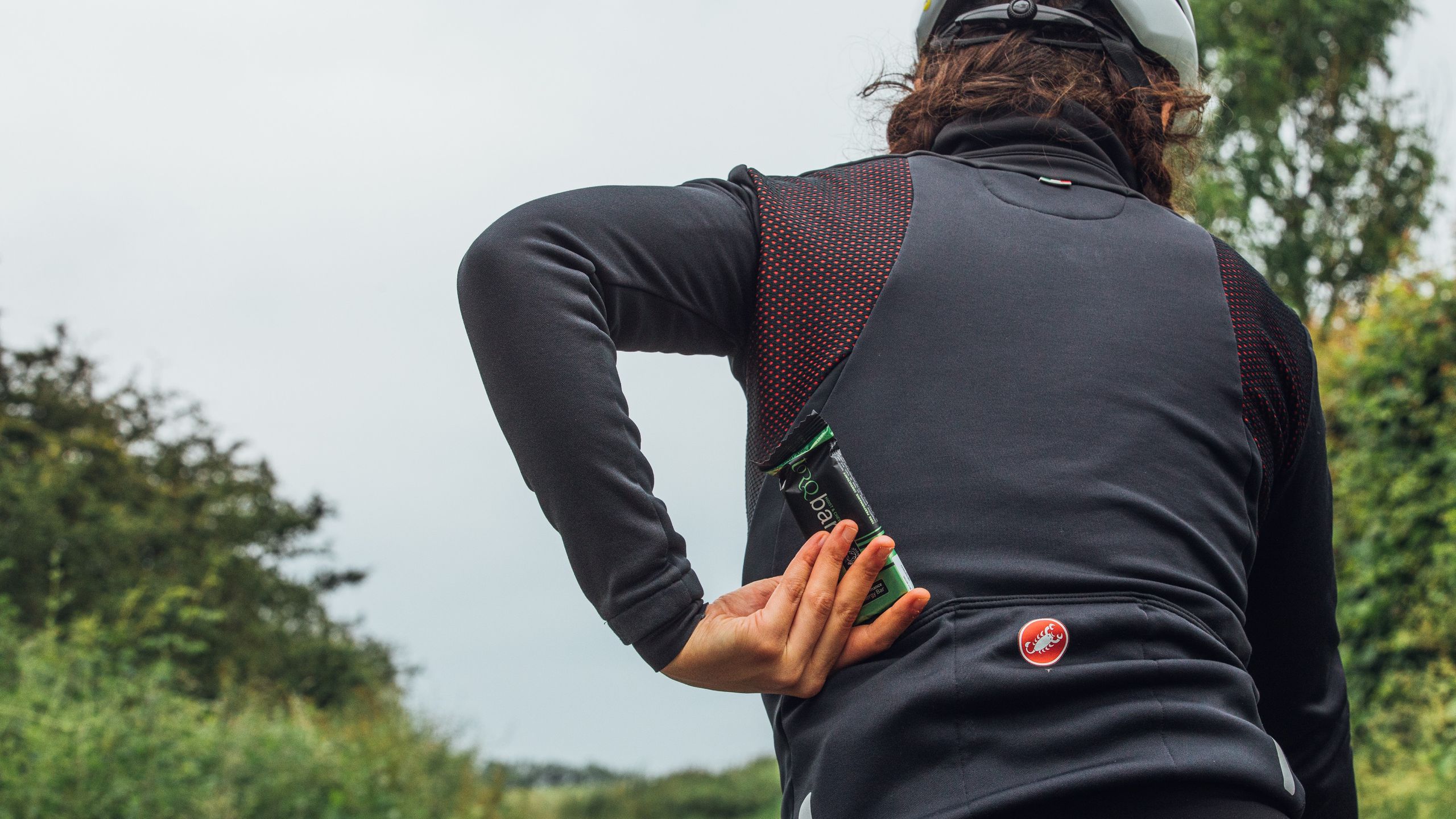
Perhaps the first thing you notice about the Torq bar is its size. At just 45 grams it's smaller than most of its rivals. This means that it fits nicely into your jersey pocket or handlebar bag. But it also means that it packs less of a carb punch than a larger energy bar. By the numbers the Torq bar reads: 45g in weight, which promises around 150 calories, 34g of carbs and 17g of sugars.
Torq's bars use a blend of glucose-derivatives and fructose to get close to the 2:1 glucose/fructose ratio which studies have shown offers a higher delivery of carbohydrate per hour – delivering 40 per cent greater absorption according to the brand.
We found that the Torq bars, which are now all-natural and vegetarian, have a very moist and natural taste that reminds us of the dried fruit squares we ate as kids. Around 13 per cent of the bars come from real fruit and flavors such as Apple, Sun Dried Banana and Mango provide a wholesome mouthful.
If you're looking for cold weather nutrition, the bars can get very solid and hard to chew as the temperature dips to zero.
Torq's energy bars are now both certified organic (by the Soil Association) and vegan friendly. It's also extended its range to include an 'Explore Flapjack', again in a wide range of flavors. At 65g per serving with over 40g of carbs, it could be the answer for cyclists who like the Torq brand but require more carbs per bar than the traditional offering supplies.
Torq's products form part of the brand's overall sports fuelling system. This allows you to mix bars, gels and energy drinks to consume two or three items per hour, which Torq says should ensure optimum fuelling.

Our expert review:
At 65g, the OTE Duo bar is larger than most, but that's because is each packet is designed to be eaten as two servings. OTE has recently reformulated its bars to remove palm oil. OTE hasn't skimped on flavor, with the chocolate variety really tasting of chocolate.
Consume the whole bar and you'll have digested 286 kcalories, 41g of carbohydrate, 7.5g of protein and 10g of fat (for the chocolate flavor). At over £40 for a box of 24, the added content is reflected in the cost, but you are getting more calories for your buck, which is as well, as the bars' size soon fills up a pocket.
The bar is offered in just two flavors: Vanilla Crispy Rice and Chocolate Crispy Rice. As you'll no doubt have guessed, the primary ingredient here is rice crisps. The idea is that the bar resembles, in some way, the rice cakes that are used by pretty much every team in the professional peloton. These cakes are popular for a number of reasons, including the high carb content as well as being pretty palatable and easy to digest mid-race.
We're also big fans of OTE's oat-based Anytime bars - these are designed for snacking but work well on the bike, being gluten and nut-free, suitable for vegetarians and very crumbly and easy to swallow. Each 62g bar provides 213 calories, 36.6g of carbs and 2.8g of protein. The latest lemon drizzle option brings the range of available flavors up to 11.
Anyone who spends time around cyclists knows we can all eat a lot. While excessive eating isn't ideal, proper fuelling on the bike can make a significant difference. The team here at Cycling Weekly is always eager to try new snacks and fuelling strategies that can enhance performance, make our lives easier, or simply because they are tasty.
Evaluating food and drink supplements can be challenging, as preferences for flavour or taste often dominate; while these factors matter, energy bars for cycling can be highly subjective. Therefore, during our taste testing, we analyze the composition of each bar and its potential to fuel you effectively. We focus on when during your session or ride to consume the bars and how easy they are to eat on the go.
Visit our How We Test page for more information on how we rate and test products and about our team of expert testers.
Without getting into depth on fueling strategy or what works for you (which can all be found in our guide to Nutrition for cycling), choosing the right bar for you comes down to the texture you find palatable, what fits your fueling strategy, and, of course, flavour.
Most of the bars in this guide range from 25g of Carbs to just over 40g, so choosing which can have big consequences on your intake. Especially when they range from 35g to nearly 70g, which isn't always consistent with more overall grams, means more carbs, as you need to factor in what else is in the bar. This can be sugars, of course, which again isn't for everyone on a long ride, espically if supplementing with the best energy gels, for example.
For some, simply being palatable and flavoursome can make a big difference in how well they fuel. If it tastes good and you can consume it easily, you're more likely to fuel well and keep energy up.
Before getting too deep into fueling, it's worth consulting a coach or sports nutritionist to get the basics right.
Energy drinks are the quickest to be absorbed and the dosage is spread out over the course of the time it takes to drink a bottle. Best combined with gels or bars and sipped throughout a ride, these include electrolytes to replace those lost in sweat.
Energy gels are the second quickest to be absorbed; a quick hit of high-glucose carb will give you a kick when you need it. Gels are easy to swallow and are best for races and high intensity when chewing is hard work. Some include electrolytes.
Energy bars are slower to release energy; bars are also lower in sugar than gels so are usually better for your gut and teeth. They require breaking up and chewing, and so are more suited to endurance rides, but are also conveniently packaged to suit jersey pockets.
Also, don't overlook the value of real food or even making your own energy bars. It's usually the best for your bank balance, stomach and teeth – assuming you've chosen something healthy. Think PB&J sandwiches, bananas, and homemade rice cakes.
Some carbohydrates are digested more quickly than others, so a bar that contains a mix of different sugars will fuel you for longer than a product like a gel that may only contain simple sugars and which may give you an energy spike that will typically drop off rapidly.
So you ideally want some simple sugars like glucose, fructose or sucrose paired with some starch. An energy bar works well to provide this, as it usually contains ingredients like starches from rice or oats and slower release sugars from dried fruit.
Energy bars for cycling tend to include a high volume of ingredients such as oats, rice, and nuts, which are generally slow-release carbohydrates. This makes many energy bars suitable for longer endurance rides, lower-intensity sessions, and recovery. This means you should always use them in moderation, but almost certainly in combination with the best energy gels and the best energy drinks for higher-intensity efforts.
Aside from their slower energy release and being more difficult to consume on the move, energy bars for cycling can be high in sugar, calories, and fibre. While these are okay when consumed in small amounts, excessive use and not in conjunction with a balanced energy intake strategy, they can have detrimental effects, such as weight gain and gastrointestinal problems. Neither is good for cycling.
Proteins take longer for your body to digest than carbohydrates. Therefore an energy bar with a high level of protein is best suited as a post-ride recovery snack, when that protein can be used to repair your muscles or to be eaten at the very end of a ride - giving your body a headstart on muscle repair.
An energy bar that has a moderate amount of protein, say 5-10 grams, is also a good option for endurance rides such as long bikepacking trips and audax events.