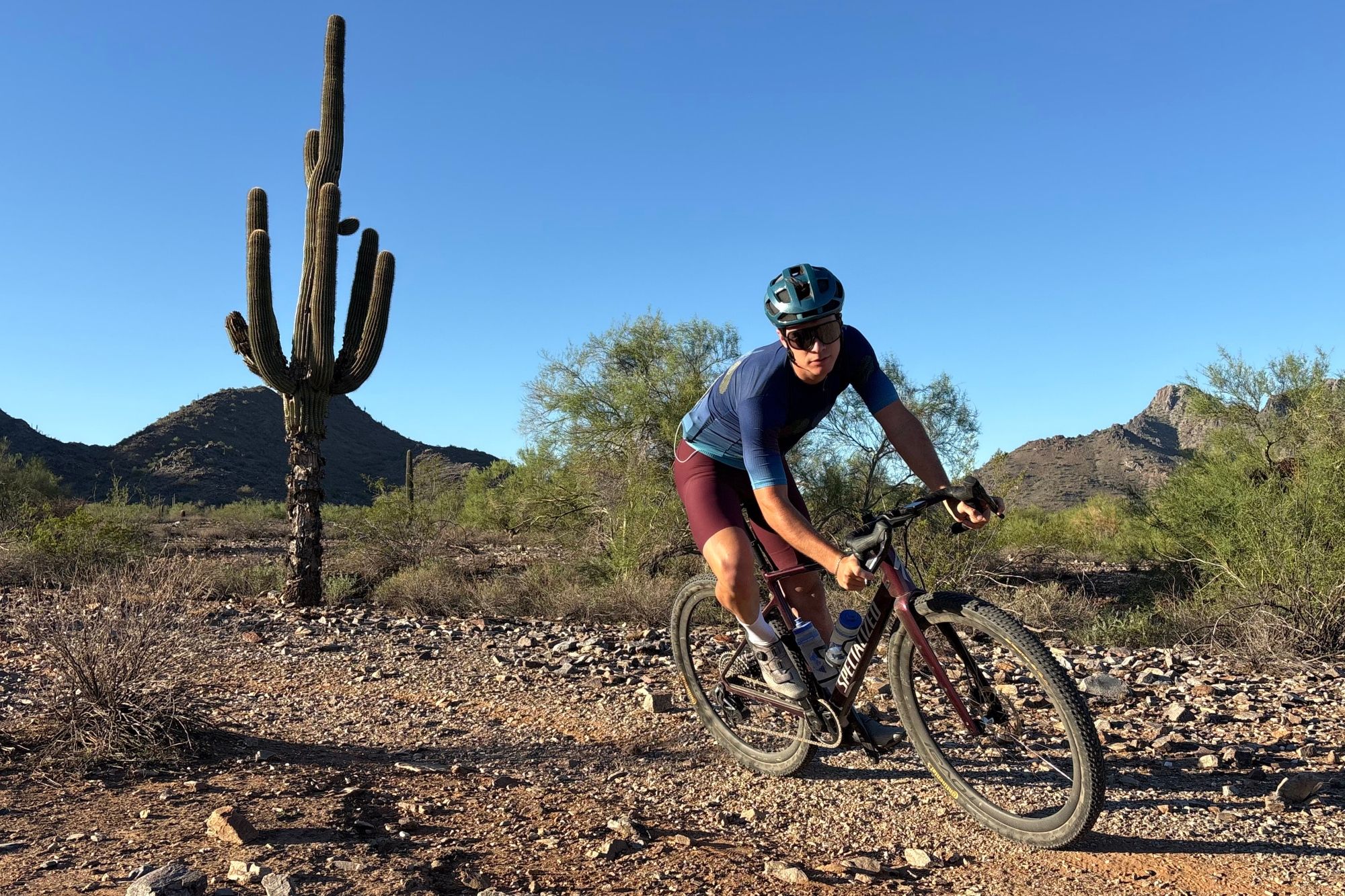
Best gravel bikes 2026: extensively ridden and rated by our experts on a wide variety of terrain
Our experts' top-rated and best gravel bikes from review to suit all styles, terrain and budgets, from bikepacking to gravel racing
The best gravel bikes are unlike any other category of bike; the term encompasses a wide range of bikes that you can ride in wildly different ways. That is the beauty of the gravel bikes: you can tailor your bike to suit your preference and bias for on- and off-road riding. This versatility makes them suitable for more than just racing or weekend adventures; they can be fantastic for commuting, bikepacking and touring, cyclocross racing, or even as a winter road bike.
Our expert reviewers have extensively tested every gravel bike below, including everything from fast, aerodynamically optimised offerings to those with knobbly mountain-bike tyres and suspension. Whether you want to ride the King Alfred Way or race the red dirt roads of Kansas, our experts have you covered.
In the last year, we have seen the lines blur even more, with many gravel bikes adopting larger tyre clearances and even top-level racers fitting mountain bikes with drop bars. The rise of wider mountain bike tyres, even in racing, is rapidly changing everyone's perception of what the best gravel bike is. For our experts, that is the Specialized Diverge 4. Quite simply put, it is everything a gravel bike should be in 2026.
If you are entering the world of cycling or gravel riding and the bikes on this page seem a little pricey, why not check out our guide to the best budget gravel bikes?

The Diverge 4 set the standard for what a gravel bike should be in 2026
Our expert review:
Reviewed by Logan Jones-Wilkins - CW Tech Contributor
It was a shock at Unbound 2025 to see not only a new Diverge being openly ridden by multiple Specialised-sponsored riders, but also that it didn't build on the Diverge STR platform. Instead, looking to build on the success of the more neutral and all-round Diverge platform, which we here at Cycling Weekly have rated highly for some years.
The Diverge 4 tries to address the need for more balance, keeping compliance height whilst upkeeping handling responsiveness and weight low. The most noticeable and arguably only major change is the loss of the Future Shock Rear suspension found on the previous Diverge STR. This is, however, offset by a far more compliant seatpost, one Specialized claims has up to 18mm of deflection. As with almost any 'new' gravel bike we have seen, tyre clearance again increases, from 47mm on the previous rigid Diverge, to a whopping 29 x 2.2", which is for those metric riders 55mm.
Right off the bat, the changes to geometry to suit the bigger tyres were noticeable; it was clear Specialized has intended the Diverge 4 to be an off-road beast. The longer wheelbase, reach, lower bottom bracket and taller stack all built confidence and ultimately speed over time. Over the month I spent riding it, I tried to cover as much of the Sonoran Desert’s terrain as I could, which is diverse in what you can ride, but nothing phased the Diverge 4, not even a trail I would class as Mountain Bike only.
An inevitable trade-off of this far more capable off-road geometry is that it falters at lower speeds; this is to be expected and, in my opinion, perfectly acceptable given how good it is elsewhere. To which point, to reap these benefits, you need to ditch the 45mm tyres, as I did and fit some of the best mountain bike tyres for gravel.
The Diverge now has very clear core principles. Specialized has made a conscious decision to lean into the demands of riding off-road, therefore building a bike for riders who live for it — even if that means losing some who don’t, of which there is the Crux.
Read our full Specialized Diverge 4 Pro gravel bike review

Our expert review:
Reviewed by Anne Marije-Rook - CW North American Editor
It's hard to discuss the Van Rysel GRVL AF 2 without having its price in the back of your mind. It's a bike that impressed me greatly, with balanced geometry, surprising comfort and clearly well-considered specification. Once you factor in that it is well under £1000/$1500, it stands out somewhat in what is becoming a very crowded gravel bike market.
Aside from the GRVL being new to me, so was the Microshift Sword drivetrain, which was launched a while back. However, given that we rarely get a chance to review an affordable bike, it was a chance to consider it. Again, I was pleasantly surprised; it shifts reliably, and the ergonomics are a massive step forward from the previous Advent shifters.
This all added to the GRVL's overall experience. Over the three days on Vermont’s lumpy backroads, it proved itself as a straightforward bike to get along with. It is stiff but not jarring, and the carbon fork and high-volume tyres help mitigate the impact of rough surfaces. The sweet spot geometry makes it a very usable bike in a wide range of scenarios, massively broadening its appeal as a bike not just for gravel.
Ultimately, the GRVL AF 2 is an excellent value gravel bike and one that is fun to ride. If I had to pick some holes, the alloy frame and wheels aren't the lightest, and this adds to the bike's overall heft. But wheels are easy to upgrade over time, and Decathlon's smart use of aluminium, while a little heavier, does offer a comfortable ride, something rarely associated with the material.
Read our full Van Rysel GRVL AF 2 review

Our expert review:
Reviewed by Hannah Bussey - CW Tech Writer
I've said it once, and I'll say it a thousand times: if you buy one bike, make sure it can do more than just one thing. That is where the Whyte design team has firmly placed the Tourus. In fact, I am not sure what came first: the bike or the name. With Tourus meaning stability, practicality and tireless.
If I had to narrow down the Tourus, then Whyte’s background in mountain biking is immediately obvious in its selection of components and geometry numbers, with a long reach, short stem and wide handlebar. However, don’t be fooled into thinking this is some sort of off-road ripper, as it's much more than that; it's safe to say it's become the most-used bike in the garage. It's been ridden almost daily from the station commute and school runs to weekend epics. It's proven itself to be an incredibly comfortable steed.
On the flat, the bike taps along nicely; clearly it's no aero race bike, but it's also far from a Dutch shopper or mountain bike. Overall, for an aluminium gravel bike it’s a respectable 11.2kg/24.6lbs. However, this weight becomes noticeable on climbs of my home roads and trails in the peak. For context, I am used to riding much lighter, higher-end machines, so it could just be my legs.
The price is what is most remarkable, really challenging Decathlon’s Van Rysel GRVL AF on value. Like-for-like, the groupset is all that separates them; Decathlon has opted for a SRAM Apex 1x Groupset over the 2x Shimano GRX found on the Whyte.
Read Hannah's full Whyte Tourus Gravel Bike Review

Factor Sarana gravel bike in its natural habitat - the woods
Our expert review:
Reviewed by Aaron Borril - CW Tech Editor
The Factor Sarana can take you places and traverse terrain many of its rivals can’t. While many options are faster and lighter, I found few bikes that match the Sarana's speed and comfort when the terrain gets rocky or washboard.
A gravel bike as capable as the Sarana also questions the need for a mountain bike – Don’t get me wrong, a cross-country mountain bike will be faster down rough, negative gradients; a bike of this nature won't keep up with the Sarana on 80 per cent of the gravel route, especially where I live in the Surrey Hills – thanks to its front suspension and fairly relaxed head angle, rough fire roads, twisty singletrack and even step-downs feel controlled.
At 9.75kg with RockShox Rudy XPLR fitted, the bike isn't the best at climbing, but it holds momentum well and conforms to the terrain, nullifying most vibration-induced speed loss associated with off-road riding. One bugbear is the narrow clearance around the fork crown and tyre. The back of the crown tends to collect dry leaves and debris, and this rubs against the tyre – this is a known issue with the RockShox Rudy fork.
I didn't want to like the Sarana, but I find myself appreciative of the concept, and the variety of riding it affords me – particularly when specced with the suspension fork. I never once felt uncomfortable; It’s no slouch on the tarmac either. This blend of disciplines makes it one of the most enjoyable drop-bar dirt bikes I've ridden this year.
Read Aaron's full Factor Sarana Gravel Bike review

Tech Writer, Aaron carving berms on the Rave SLR ID2
Our expert review:
Reviewed by Aaron Borrill - CW Tech Writer
It might share its name with the original Rave SLR, but the Wilier Rave SLR ID2 is a different beast. No longer is this a lukewarm all-road adventure bike. The Rave is now a full-fledged, aero-optimised contemporary gravel race machine. The result of innumerable hours of wind tunnel testing and CFD modelling at Wilier’s Innovation Lab in Rossana, Veneto, Italy, is a bike that is 5.3 watts at 35km/h faster than the outgoing Rave SLR. Which might not sound like much when compared to road bikes' numbers, but at 350W over 70km, that could be 50 seconds on the clock.
Other changes include a shorter overall geometry but one that handles a bigger tyre, now up to 52mm (2.1”), offering a more ‘road’ like feel, but more importantly, much more in line with other racey gravel bikes like the Cannondale SuperX and Specialized Crux. The total build comes in at 8.45kg (without pedals), which is not particularly heavy for a gravel race bike, but noticeably heavier than those that can hit sub-8kg.
Speed is the Rave’s secret weapon on the open road; it can devour mile after mile without much effort – even on chonkier surfaces, it is fast. Helped very much by the riding position, which feels a lot like a road bike. Despite the ‘stiff’ racey platform, overall frame compliance is top-notch, particularly at the front end, which absorbs a lot of trail chatter. It would be a miss not to mention the Miche Graff Aero when discussing compliance, as these excellent wheels arguably do much of the heavy lifting.
Wilier has done an impressive job with the Rave SLR ID2, delivering a race-honed gravel platform. At well under £6000, the Rave SLR ID2 is one of the most affordable premium-level gravel race bikes on the market. Sure, it’s heavier than some, but based on speed and trail comfort, the Rave SLR ID2 leads the charge on overall value amongst gravel race bikes.
Read Aaron's full Wilier Rave SLR ID2 Gravel Bike Review

The Cervélo Áspero-5 to the backdrop of Swinley Forest in Southern England
Our expert review:
Reviewed by Andy Carr - CW Tech Editor
The Cevélo design language is clearly visible in the new Aspero’s profile, deep headtube, boxy downtube, huge bottom bracket, and trademark tyre-hugging seat tube. At first glance, it could be mistaken for a road bike, perhaps a new S5-inspired Soloist; it's not until you get up close, inspect the tyres and see they are 42mm wide, that you know this is very much a gravel bike.
This visual illusion transfers to the ride as well. This is a bike that is less of an out-and-out gravel racer and more of an all-road bike with excellent gravel capability. Once you get your head around that, it all becomes clear. That continues yet again in the ride quality; Cervélo have no right making a bike as aerodynamically refined as this, as comfortable as it is, the attention to detail in the carbon fibre layup is very clear.
Over the two other bikes in the group test, conducted for our magazine, the Factor Alato & 3T Racemax Italia, the Aspero-5 is far more balanced. Its lovely road-like handling is kept anchored by a slightly longer geometry out back, which helps hold the speed without boring.
I initially disliked it, believing the need for the category was completely unassured. I was wrong; I ended up falling in love with the Aspero-5. While it lacks mud clearance for UK conditions, it's costly compared to the model it replaces, it's much more usable and enjoyable than either the Soloist or S5.
Read Andy's Cervélo Áspero-5 Gravel Bike Review
We have a dedicated team of testers here at Cycling Weekly, whose job is to review a whole range of cycling products and to write objective reviews of their experience of using them day in and day out in a whole range of conditions.
With huge experience, they're well-placed to compare products, identify their strengths and weaknesses and bring you an honest, unbiased assessment of how they perform.
Testing gravel bikes calls for the logging of plenty of miles - and our testers do just that. Depending on the bike, routes range from technical mountain bike-style trails to multi-day bikepacking adventures and plenty in between. We also make sure that we test the bikes on paved roads, given that many riders will use gravel bikes for commuting and winter riding, and many gravel rides will involve some tarmac as well.
While out riding, we asses the bikes across a range of factors, including comfort and handling, suitability for a variety of gravel terrain and bikepacking, as well as the quality and durability of components and the bike's overall value for money.
Read more on How we test products on our dedicated page.
There's hardly a day that goes by when Rook is not found pedalling. Roo, while no longer competing, is a prolific pedaller and Unbound finisher nonetheless. Originally from the Netherlands and now residing in the Pacific Northwest, Rook is uniquely placed to understand both the European and North American gravel market.
Aaron is Cycling Weekly's newest tech writer, but that doesn't mean he lacks experience. As the former editor of off-roadcc, along with tech and digital editor positions at Cyclingnews, Bike Perfect, Bicycling and TopCar. On the bike, he is about as accomplished as you can get for someone with a day job and represented South Africa in a number of disciplines. His latest love is gravel and recently took on the inaugural Gravel Burn race up against the likes of Tom Pidcock.
Based in Phoenix, Arizona, Logan is a writer and reporter with a deep understanding of gravel racing, its participants, and the overall scene. He has immersed himself in the sport over the past few years, not just attending events like Unbound, but actively competing. Logan's contribution to CW has earned him the Tech Editor role at Velo.
Andy is a champion of the highest standards in fit, fabrication and finishing. Having spent much of his adult life fabricating and designing for his own brand, Spoon, has become one of the most desirable custom offerings out there. While his heart is on the road, his knowledge of bike fitting and bike construction is invaluable when things hit the gravel.
Gravel bikes aren't defined by just the shape of their handlebar. Although they typically come with a drop bars, some brands have started introducing flat bar versions. In a sentence, they are bikes that allow you to veer off paved roads and onto more exciting terrain whenever you feel like it.
Born with the spirit of adventure, the best gravel bikes sit somewhere between the best endurance and sportive bikes and the best cyclocross bikes, with a blend of the best hardtail mountain bikes thrown in. They're nimble on paved sections of road compared to fat-tired MTB steeds, but more confidence-inspiring when it comes to tackling rough surfaces when compared to their slick-tired road-going siblings.
The best gravel bikes typically feature wider tyres, with room for extra mud clearance, and disc brakes as standard. Expect anything from 35c up to 50c or more on either 700c or 650b wheels.
Mounts for bottle cages, pannier racks and extra storage will often feature on the best gravel bikes, as will the option for fitting fender/mudguards.
As with all bikes, it's vital that you get the best bike to fit you, and it doesn't need to be gender specified. But if you are after a women's specific model, which often includes smaller sizes and different touchpoints like a wider saddle and narrower bars, you might want to check out our best women's gravel bikes for off-road adventures page.
If you're juggling a tighter budget, but still want the best, our page dedicated to the best budget gravel bikes: gravel bikes under £1,000/$1500 are ideal for getting the best value for money adventures on two wheels. These bikes typically come with similar handling characteristics to the more expensive bikes but feature more economical componentry.
This crossover discipline can add a slight confusion in the cycling gear department too, i.e. to Lycra or not to Lycra. Thankfully our guide on the best gravel bike clothing: cycling kit for your gravel ride should sort out any kit quandries.
Compared to road bikes, you will find wider and lower gear ratios on the best gravel bikes, which will help you ride over loose or hilly terrain especially when carrying bikepacking bags if you're gearing up for multi-day expeditions.
In general, the best gravel bikes will also have a lower bottom bracket than a cyclocross bike, helping to provide enhanced stability on rocky, rooty and rough terrain. For more details on exactly what the differences are, you might find our gravel vs cyclocross bikes: what is the difference page really helpful.
For those wanting to head off the beaten track, but worried about keeping up, you might want to consider an electric version. Electric gravel bikes give you all-terrain capability and confidence-inspiring stability but with some additional assistance.
If you’ve ever gone out on a ride on your best road bike and noticed unpaved roads, fire trails or alluring singletrack as you passed, wondering where they lead but hesitating to head off the tarmac, then a gravel bike or adventure road bike may be for you.
These bikes aim to meld on-road efficiency with off-road capability, so you'll find overlaps in design features with both road and cyclocross bikes, as well as incorporating elements from mountain bike technology. When you're shopping for your first gravel bike, as standard you should expect disc brakes and clearance for wider tyres.
Whereas cyclocross bikes are designed with short, muddy races in mind, gravel and adventure bikes take longer unpaved rides into account. You'll still find race-orientated builds in the gravel category for gravel racing, alongside adventure bikes that feature additional clearance and mounts to accommodate luggage and often even wider tyres for more remote journeys.

As with road bikes, gravel bikes can be made from carbon, aluminum, titanium or steel.
Carbon and aluminum are the two most commonly used frame materials, and all the bikes in this guide are made from one or other of these two options. Carbon tends to be more expensive and lighter whilst aluminum frames are heavier but cheaper. This means that for a similar price, you can expect better components on an aluminum-framed bike than on one with a carbon frame so you might have to decide where your priorities lie when choosing between the two.
The big advantage of using carbon as a frame material is that it can be added exactly where it is needed for strength and stiffness or removed where it is not needed to lower weight and fine-tune compliance.
Titanium gravel bikes are less widely available, with aficionados often describing the ride quality as being more ‘lively’ than carbon or aluminum whilst also offering low weight and high strength among its qualities.
High-end steel frames offer an almost titanium-like ride, albeit with a bit of a weight penalty whilst at the lower end some manufacturers offer steel bikes as a potentially more durable and repairable option to aluminum.
Regardless of frame material, most gravel bikes have carbon forks as the carbon layup can be tuned to provide some degree of protection against trail vibrations which is important at the front end of an off-road bike.
Stability and handling are key when it comes to riding off-road. Expect to see a lengthened wheelbase, slack headtube angle and lower bottom bracket compared to road bikes, all of which aid with technical terrain and steeper descents.
The rider position is typically more upright than on road bikes, both for comfort over long rides and to allow the rider to move their weight around more easily when negotiating off-road obstacles.
Thru-axles and disc brakes have quickly become standard on gravel (and many road) bikes, technologies borrowed from mountain biking. You can also find front and rear suspension, although these aren't commonplace yet.
The norm is 12mm thru-axles, which make for easier disc brake alignment and rigidity. Rear-axle spacing for disc brake wheels is typically 142mm (thru-axle), or occasionally 148mm Boost spacing for stronger wheelsets.
More adventure or utility-centric frames will come with mounts for racks and fenders so that the bike can be used as a sturdy commuter or year-round road bike. At the most extreme end of the adventure bike market, fork leg mounts and extra frame mounts are becoming increasingly common for even more luggage carrying options.
There is a wide range of specialist gravel bike components which add extra features for gravel rides that are different from those you'd find on road bikes. Below are a few things to consider when looking for the best gravel bike for your needs.
You can find adventure road and gravel bikes shod with tyres of pretty much any width between a 28c and 47c, plus tyres measured in inches on 650b wheel builds!
The best gravel bike tyres can dramatically improve your ride. There's a real range of tread patterns available, which can add extra grip for muddy conditions or lower rolling resistance if you're mixing in more tarmac and cater for everything in between.
We think changing your tyres is one of the best gravel bike upgrades you can make. Going tubeless is also a great option to improve comfort and reliability.
In the UK, you're likely to come across patches of wet mud or loose dirt year-round, so a more aggressive tread can be useful in those situations to help you maintain grip, albeit at the expense of on-road speed.
But in the US, gravel roads can range from well-graded packed dirt that almost resembles tarmac, to the crushed and graded limestone you find in the Flint Hills of Kansas.
Finding the right tyres for your riding terrain may take some experimentation, and don't be afraid to try something with more or less tread than you're used to. You might also want to change your tyres between summer and winter to get the best width and tread pattern for the conditions.
Most gravel and adventure bikes are specced with tubeless or tubeless-ready tyres and rims, ready for conversion to a tubeless set-up. Rather than having to replace an inner tube every time you flat, the sealant in the system will (in theory) plug any punctures from sharp objects like thorns, which is a real advantage when it comes to riding off-road.
You may need to re-inflate the tyre a little if you have a puncture. Tubeless tyre plugs can get you riding quickly, but make sure you're equipped with a spare tube and full tubeless repair kit for more serious tyre damage.
Adventure road bikes and gravel bikes are designed to be ridden on the road as well as off, so you'll typically find a wide gear range to allow both efficiency and speed on the road, as well as enough gears to cope with loose and steep terrain off-road.
The choice between a double or single chainring up front is usually down to rider preference. A 1x (one-by) set-up gives ultimate simplicity and can allow for greater tire clearance, but sometimes at the cost of wider jumps between ratios, although the latest 12 and 13-speed groupsets go some way to avoiding this.
Double chainrings offer more options for riders who prefer to spend more time on smoother terrain or on the road and may give you a greater overall range with smaller jumps between ratios.

A 1X drivetrain keeps it simple and can allow for greater rear tire clearance
Gravel bikes often feature a drivetrain that goes below 1:1 for off-road climbing and load carrying. That might be via a 1x set-up like SRAM XPLR with a cassette that goes to 42 teeth or greater or a two-ring supercompact chainset with 48/32 or 46/30 chainrings paired with an 11-32 or 11-34 cassette. You'll even find "mullet builds" that mix a road chainset with an MTB cassette and rear derailleur for ultra-low gearing, as low as 38x52t.
Read our guide to gravel bike gearing for more.
Pedal choice is a matter of personal taste and will be dependent on your riding style, but check out our guide to the best gravel bike pedals for advice. If you ride predominantly on roads and well-maintained paths where you rarely need to put a foot down, then road cycling shoes, clipless pedals and cleats may be a good choice.
On the other hand, more demanding off-road riding may mean that you need to dismount and walk with the bike or put a foot down for stability. In this case, gravel bike shoes and two-sided gravel bike pedals with grippy treaded soles and recessed cleats derived from mountain bike systems may be a better choice for their ease of walking and easier foot engagement with the pedal.

Mountain bike style pedals make walking, mounting and dismounting easier
Adventure and gravel bikes use disc brakes for their better modulation and more consistent stopping in dry, wet and muddy conditions. This also has a really positive impact on wheel rim longevity compared to rim brakes for off-road riding.
On higher-value models, the brakes will be hydraulic, while budget bikes typically have mechanical callipers. With Shimano's GRX and SRAM's gravel-specific groupsets available with hydraulic discs only, this tends to be the preference. You'll occasionally find mechanical disc brakes on adventure bike builds, where long-distance riders find them easier to maintain and repair in more remote situations.
Different types of handlebars are also worth considering on adventure bikes. Again, we've got a guide to the best gravel bike handlebars for more info.
Flared bars are generally accepted as a good upgrade to give greater stability in the wider drops for rough terrain and descending off-road. The wider the flare, the easier it is to fit a handlebar bag on the front of the bike and still be able to fit your hands on the drops and brakes at the same time. Raised bars such as the Specialized Hover Bar also help to give more clearance over the front wheel for smaller riders, as well as providing a more upright riding position.
Short travel suspension forks like the RockShox Rudy Ultimate XPLR and the Cannondale Lefty Oliver are also an option that is sneaking into gravel bike design.
The lifespan of a gravel bike in theory is similar to that of any other bike. How and where you ride your gravel bike can influence this, but we are mostly talking about the components and paintwork rather than the longevity of the frame and fork. Ultimately, it all depends on how well you maintain your bike.
It is not unreasonable to expect well over 10 years out of a bike, well, at least the frame, fork and wheels. However, it is inevitable that components will wear depending on your mileage. Expect to have to replace the chain and cassette, for example, multiple times throughout a bike's life, perhaps even multiple times per year.
There has been a fairly standardised 'entry' into the gravel market for some time, with much dictated by the cost of groupsets. The likes of Microshift Sword, Shimano's new Cues drop bar systems, but previously their Sora, Claris and entry-level GRX, along with SRAM's slightly more expensive Apex groupsets.
Cost aside, it depends on your background in cycling as to what you may consider a 'Beginner gravel cyclist' to be. For many, it will be a cost-based decision, in which case you can't go wrong with our best budget gravel bike, the Van Rysel GRVL AF 2. Which offers balanced and fun handling, robust build and all at a very reasonable price.
For those who are already cyclists and are transitioning to a new discipline, you may have slightly higher expectations or requirements for the specification and geometry. While the Van Rysel could still offer something here, the versatility of models like the Specialized Diverge and Giant Revolt, could be a good place to start and work outwards from.
Very bluntly, no! By no means are they rubbish, and many of the more up-to-date models that feature 50mm plus tyre clearance are certainly getting close to the do-it-all category.
The easiest way I find to describe gravel bikes is a jack of all trades and a master of none. You have to remember that this is based on a large segment of the gravel market, which is focused on that wide-ranging versatility we all want from them. Within that, there are again niches which feature much more dedicated use cases and practicalities designed for a specific style.
Essentially, gravel bikes are very versatile but tend to struggle on the fringes of their use case. As a straightforward example, a gravel bike designed primarily for off-road use, such as the Cotic Cascade, will struggle on the road, but it doesn't mean it can't do so with the right tyres or with the right legs.